
Every January, the same thing happens. Your schedule is full and your team is busy, yet less cash lands in the bank.
Deductibles have reset, so patients and families now owe a bigger share of every visit, and insurers pay less. That shift puts real pressure on your healthcare accounts receivable right when payroll and payroll taxes climb.
The good news is that deductible season is predictable. If you plan for it now, you can keep payroll on schedule and avoid expensive last-minute financing.
In this guide, we'll cover:
- Why deductible season squeezes cash flow, and which practices feel it most
- How to size your own exposure using last year's numbers
- How to build the season into your budget and track it monthly
- The patient payment policies to set before January
- Why to put credit in place early, and why to avoid merchant cash advances
- The A/R metrics to watch from January into spring
Want to see if you’re leaving money on the table?
Get a free financial assessment from our healthcare accounting experts.
Why Deductible Season Strains Healthcare Accounts Receivable
Most commercial health plans reset deductibles on January 1. Until patients meet their deductible, they pay more of each claim themselves. Insurers pay less, and the patient's share arrives later.
Patient responsibility rises from January into spring
High deductibles are now the norm. According to KFF's 2025 Employer Health Benefits Survey, 88% of workers with single coverage have a general annual deductible, and the average is $1,886. About a third of covered workers (34%) are in a plan with a deductible of $2,000 or more.
For your practice, that means a larger slice of January–spring revenue sits in patient balances.
Patient balances are slower and less certain to collect than insurance payments. Some families pay at the visit. Others wait for a statement, set up a plan or fall behind.
Payroll doesn't wait
While collections slow, costs don't. Therapists, BCBAs, RBTs, caregivers and hygienists still need to be paid on schedule.
Employer payroll taxes also reset each January. Federal and state unemployment taxes (FUTA and SUTA) apply only to the first portion of each employee's annual wages, so much of that cost lands in the first quarter. For higher earners, Social Security tax also restarts after reaching last year's wage cap.
The result is a cash squeeze: revenue arrives later while expenses arrive earlier.
Which practices feel it most
Deductible season hits hardest where many patients are commercially insured or on high-deductible plans, and where visits are frequent:
- ABA therapy, where weekly treatment hours add up quickly against a family's deductible
- Behavioral health and counseling practices with weekly sessions
- Speech, occupational and physical therapy (ST/OT/PT) practices with recurring visits
- Home health agencies serving commercially insured clients
- Dental practices, where many plans reset deductibles and annual maximums in January
If you run an ABA practice, the operational side matters as much as the financial side.
Our partners at Motivity cover it in their companion guide, how to prepare your ABA practice for deductible season, including the early warning signs to watch and how to talk with families before a surprise bill.

This is where Flychain comes in. We work exclusively with independent healthcare practices, combining Healthcare Bookkeeping, Practice Intelligence, Capital and Taxes on one platform. That gives practice owners a clear view of their healthcare accounts receivable and cash position before deductible season begins.
How to Size Your Practice's Deductible Season Exposure
Before you can plan, you need a number. Start with your own history rather than industry averages, because payer mix, visit frequency and patient demographics vary widely between practices.
Use last year's January–spring numbers
Pull your results for January through April of last year and compare them with a typical fall month. Look at four things:
- Patient share of revenue: how much more of each month's billing was owed by patients
- Collection rate on patient balances: how much of what patients owed you actually collected
- Time to collect: how many days it took patient balances to turn into cash
- Cash outflows: how much payroll and payroll taxes rose in the same months
If your books don't separate patient balances from insurance balances, that's the first thing to fix.
Accurate, specialty-aware bookkeeping makes this exercise take minutes instead of days.
A simple worked example
Here's an illustrative example (not real client data) for a practice billing $200,000 a month:
In this example, the practice ends January with $18,000 more sitting in patient A/R than in a normal month. That's before counting higher payroll taxes. If February and March look similar, the gap can build quickly.
Let your systems surface it early
Practice management platforms can show patient responsibility before a session happens, which gives your team time to act.
For ABA practices, Motivity offers electronic patient statements, a Stripe integration for card payments, and revenue cycle management (RCM) services that help families understand what they owe and pay sooner.
On the financial side, Flychain's Practice Intelligence shows how your revenue, margins and expenses compare to similar practices in your specialty, so you can see whether your January dip is normal or a warning sign.

Healthcare Budgeting for January Through Spring
Once you know the size of the gap, build it into your plan. Good healthcare budgeting treats deductible season as a known seasonal pattern, not a surprise that shows up in your bank balance.
Build the season into your budget
- Lower expected collections for January through April, based on your sizing exercise
- Add front-loaded payroll taxes to January and February
- Set a cash buffer target, measured in months of payroll on hand, that covers the gap, such as the extra A/R you calculated plus a margin of safety
- Time large purchases, new hires and new locations around the dip where you can
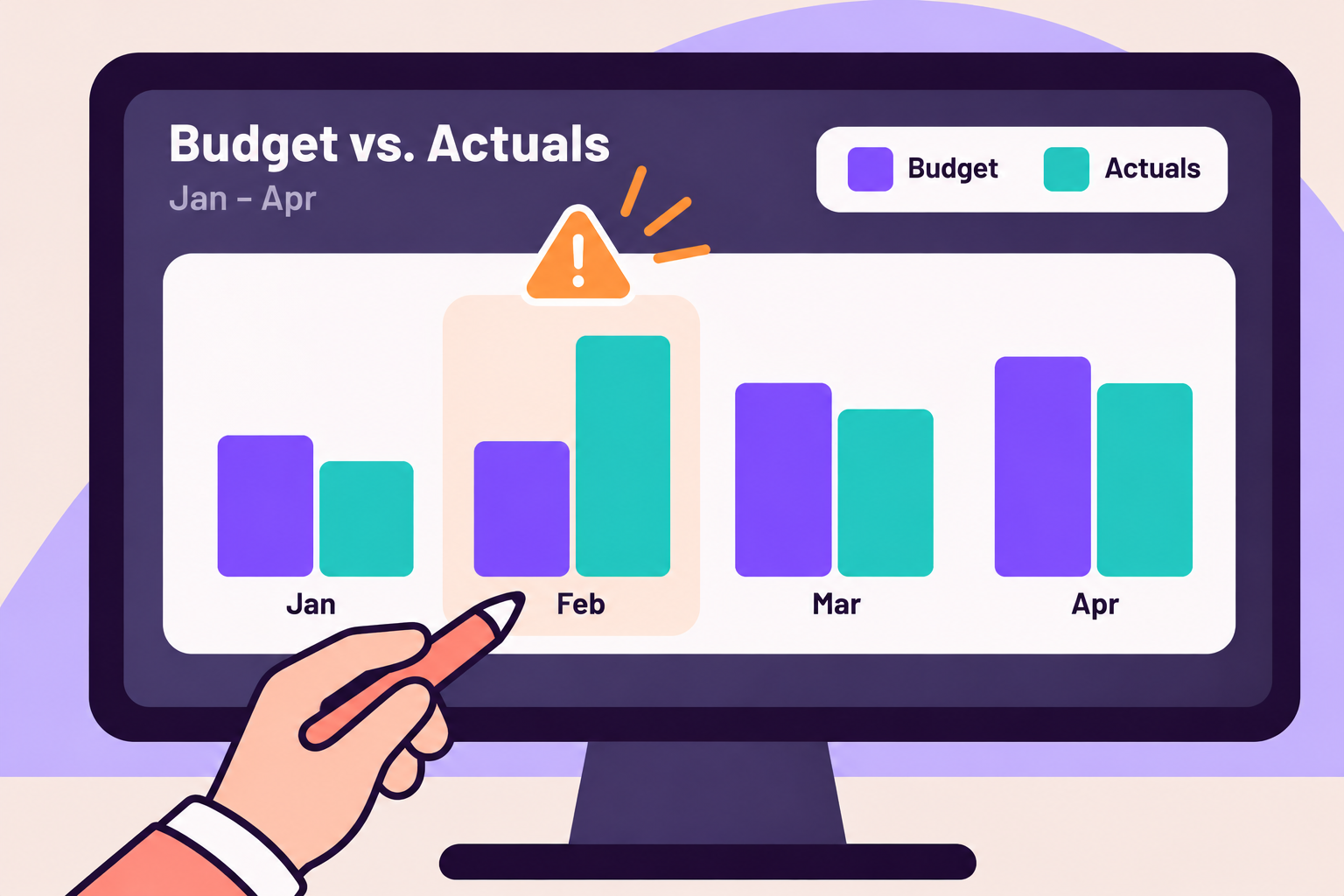
Compare budget to actuals every month
A budget only helps if you check it. Each month, compare actual revenue, collections and expenses against the plan.
The goal is to tell a seasonal dip from a real operational problem, such as rising denials, more cancellations or slower billing, and to act early.
If January collections come in 15% below last year but on budget, that's expected. If they come in well below budget, dig in before February.
How Flychain supports healthcare budgeting
- Accurate monthly books: Flychain's healthcare bookkeeping team closes your books every month, so budget-vs-actual comparisons rest on real numbers
- Practice Intelligence: Specialty Benchmarking and Flychain AI compare your financial metrics with similar practices in your specialty and point out areas for improvement
- Full-Service CFO: for ABA practices, Flychain's Full-Service CFO builds a monthly budget with you, benchmarked against real ABA practice data, and walks through budget vs. actuals every month, separating seasonal effects like payroll tax resets from genuine operational issues
Patient Payment Plans and Policies to Set Before January
The best time to set your payment policy is before families receive their first January statement. Clear policies improve patient collections and reduce awkward conversations later.
Decide how you'll collect
- Collect at the time of service: take copays and estimated patient responsibility at each visit
- Share estimates up front: verify benefits and give families an estimate of what they'll owe once deductibles reset
- Keep a card on file: with written consent, charge balances automatically once claims process
- Offer a patient payment plan: spread larger balances over a few months with clear terms
Set clear rules for patient payment plans
A patient payment plan works best when it's simple and written down. Include:
- A minimum monthly payment and a maximum length
- Automatic payments wherever possible
- What happens if a payment is missed
- Who on your team manages plans and follows up
Communicate early
Tell patients and families about your policy in December, then follow up individually with anyone likely to face a large balance. Motivity's guide covers how to approach these conversations with ABA families, from a general message to all families to individual follow-ups, and why tone matters. Read Motivity's guide to talking with families before deductible season.
Simple ways to improve patient collections all season
- Send statements promptly and electronically, not weeks after the visit
- Make it easy to pay online or by card
- Review aging patient balances weekly from January to April
- Assign one person to own patient balance follow-up

Get a Line of Credit in Place Before You Need It
Even with a strong plan, collections can slow more than you expect. A line of credit gives your practice a safety net, and the best time to arrange it is now.
Why timing matters
Lenders assess your practice based on its current financial picture. Applying while revenue is steady puts you in a much stronger position than applying in the middle of a shortfall.
Having a line in place doesn't mean you have to use it. It means that if January and February come in light, you can cover payroll without scrambling.
Choose financing built for healthcare
Many generic business lenders don't understand how insurance reimbursement works or why a practice with strong billings can still be short on cash. Flychain Capital offers financing designed around how healthcare practices actually get paid, including Advanced Payments on Claims.
For a full overview of your options, from bank lines of credit to SBA loans, see our complete guide to healthcare practice financing options. If much of your cash is tied up in unpaid insurance claims, our explainer on how medical factoring works covers another option.
Home health agencies feel the same timing gap with commercially insured clients. If you run one, review your home care financing options before January rather than after the squeeze begins. Home care financing arranged in advance gives you room to keep caregivers paid while patient balances catch up.
Why a Merchant Cash Advance Is a Trap for Medical Practices
Practices that wait until they're already short on cash often find traditional lenders won't extend credit. That's when merchant cash advance (MCA) companies tend to appear, offering fast money with few questions.
How a merchant cash advance works
An MCA isn’t a traditional loan. On paper, the provider buys a portion of your future receivables at a discount. In practice, most providers collect through fixed daily or weekly debits from your business bank account, whether or not your payments have come in that week.
Pricing is usually expressed as a factor rate rather than an interest rate, which makes the true cost hard to compare. For example, a $50,000 advance at a 1.3 factor rate means repaying $65,000. If that's repaid over a few months, the effective annual cost can be very high.
Why MCAs hurt medical practices in particular
- Daily or weekly repayments pull cash out before you can use it for payroll
- Fixed debits continue when collections slow, which is exactly the problem you were trying to solve
- Short terms and stacked advances can turn a two-month gap into months of financial strain
Here's how the two options compare:

Healthcare Accounts Receivable Metrics to Watch Each Month
A few numbers, tracked monthly, show whether deductible season is going to plan. Compare each metric with the same month last year, not just last month, so seasonal swings don't mislead you.
Act on what you see
- If days in A/R climb faster than last year, look at statement timing and payment plan follow-up
- If aged balances grow, prioritize outreach to families with the largest balances
- If months of payroll on hand fall below your target, that’s the signal to draw on your line of credit rather than delay payroll or take an MCA
If you run an ABA practice, Flychain’s Full-Service CFO tracks revenue cycle metrics like days in A/R and net collection rate in a monthly KPI report, with written analysis from your CFO, so you spot problems in your healthcare accounts receivable before they reach your bank balance.
For more on why timing, not revenue, causes most cash crunches, read the cash flow problem nobody talks about.
Preparing Together: Flychain and Motivity
Deductible season has an operational side and a financial side, and practices need both.
Motivity, the all-in-one ABA platform, helps practices communicate with families and get paid through electronic patient statements, payment integrations and RCM services.
Flychain turns that operational picture into financial clarity: bookkeeping, Practice Intelligence, cash flow and capital.
For the operational checklist, read Motivity's companion post on preparing your ABA practice for deductible season.
Frequently Asked Questions
When do deductibles reset?
Most commercial health plans reset deductibles on January 1, though some follow a different plan year. Check your largest payers so you know when patient responsibility will rise.
How long does deductible season affect a practice's cash flow?
Usually from January into spring, as patients gradually meet their deductibles. The exact timing depends on your payer mix and how often patients visit.
Should a healthcare practice offer patient payment plans?
For larger balances, often yes. A simple, written patient payment plan with automatic payments makes it easier for families to pay and helps you collect more of what you're owed.
Is a merchant cash advance for a medical practice ever a good idea?
Rarely. MCAs are expensive and are usually repaid through fixed daily or weekly debits from your bank account, which can deepen a cash gap. A line of credit arranged ahead of time is usually a much safer option.
What is healthcare accounts receivable?
Healthcare accounts receivable (A/R) is money your practice has earned for services already delivered but hasn’t collected yet. It includes both claims waiting on insurers and balances owed by patients. In deductible season, more of your A/R shifts to patient balances, which usually take longer to collect.
What is a good days in A/R for a healthcare practice?
It depends on your specialty and payer mix. For ABA practices, Flychain’s ABA KPI Workbook treats 45 days or fewer as excellent, 45–50 days as healthy and over 50 days as needing work. Whatever your specialty, compare each month with the same month last year so deductible season doesn’t skew the picture.
When should a healthcare practice apply for a line of credit?
Ideally a few months before you need it, while revenue is steady. Lenders look at your current financial picture, so applying in the fall puts you in a stronger position than applying in January once collections have slowed.
Protect Your Healthcare Accounts Receivable This Deductible Season
Deductible season will come around again this January, but it doesn't have to catch your practice off guard. By sizing your exposure, budgeting for the dip, setting payment policies early and putting credit in place now, you can keep payroll on schedule and your healthcare accounts receivable under control.
So ask yourself: when collections slow next month, will you know exactly where your cash stands and what to do about it?
Flychain is the financial partner built for independent healthcare practices, with healthcare bookkeeping, Practice Intelligence, Capital and Taxes in one place. Let us help you go into January with a plan.
Go into deductible season with a plan.
Book a free consult with Flychain’s team to talk through your A/R, cash and budget before January. Book your free consult.