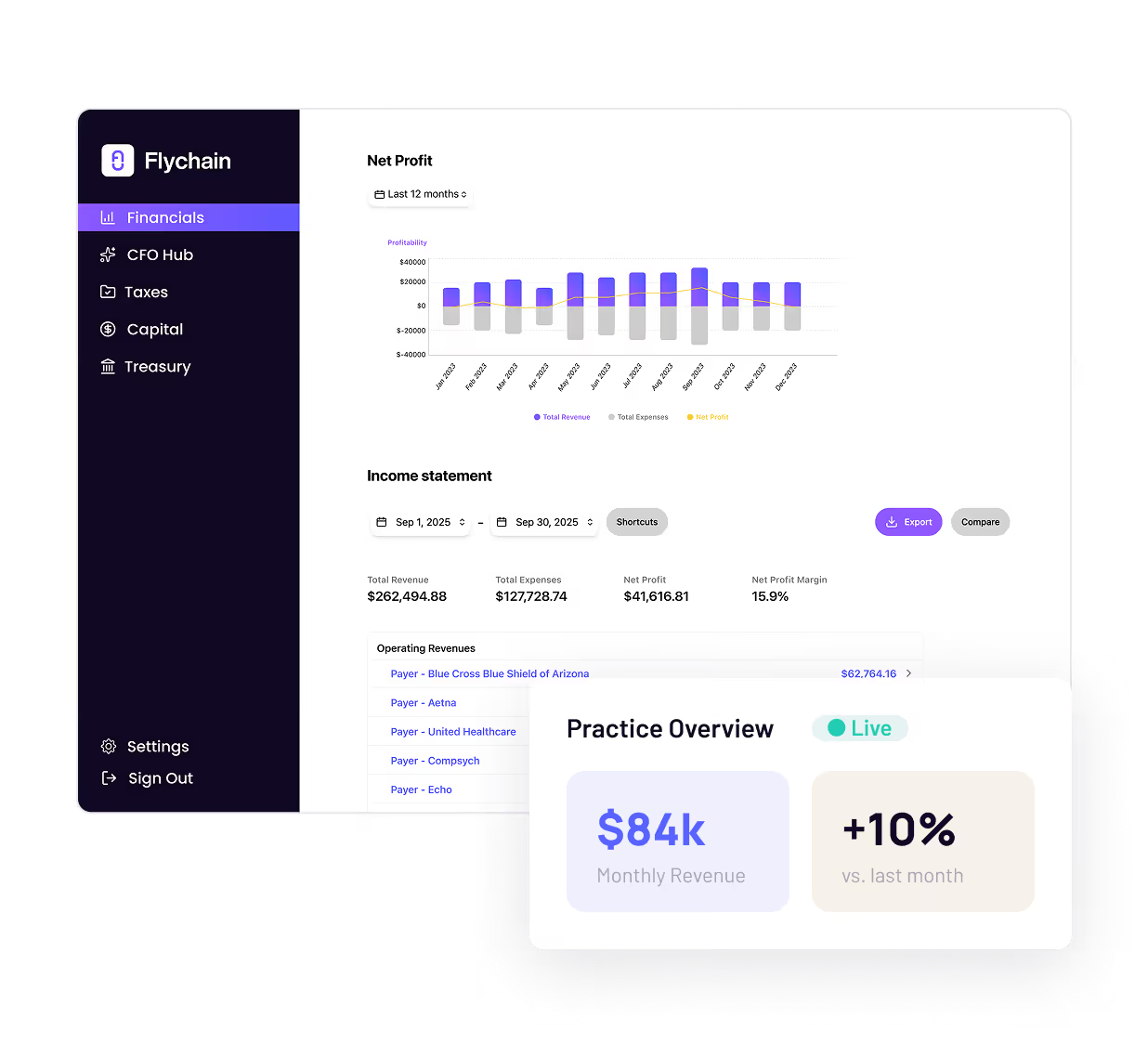
Healthcare Accounting Is Fundamentally Different
Generic software and non-specialized accountants leave healthcare practices exposed — costing you time, money, and compliance.

Industry-Specific Complexity
Generic tools weren’t built for healthcare. Payer contracts, CPT codes, multi-location operations, and accrual accounting change everything.

Compliance Gaps
HIPAA, healthcare tax laws, and audit requirements demand specialized accountants. General CPAs or DIY tools leave costly gaps.

Lost Profitability
Without healthcare-specific KPIs, rate analysis, and payroll benchmarking, generic solutions miss revenue - costing thousands each year.
Flychain vs Alternatives
Compare Flychain against QuickBooks, general bookkeeping services, and general tax CPAs across the five dimensions that matter most to healthcare practices.
Deep Dive
Flychain vs. QuickBooks for Healthcare Practices
QuickBooks is a general accounting tool — but medical practices have unique needs that off-the-shelf software simply can't address without significant manual configuration and additional professional services.
Everything your Practice Needs. One Platform.
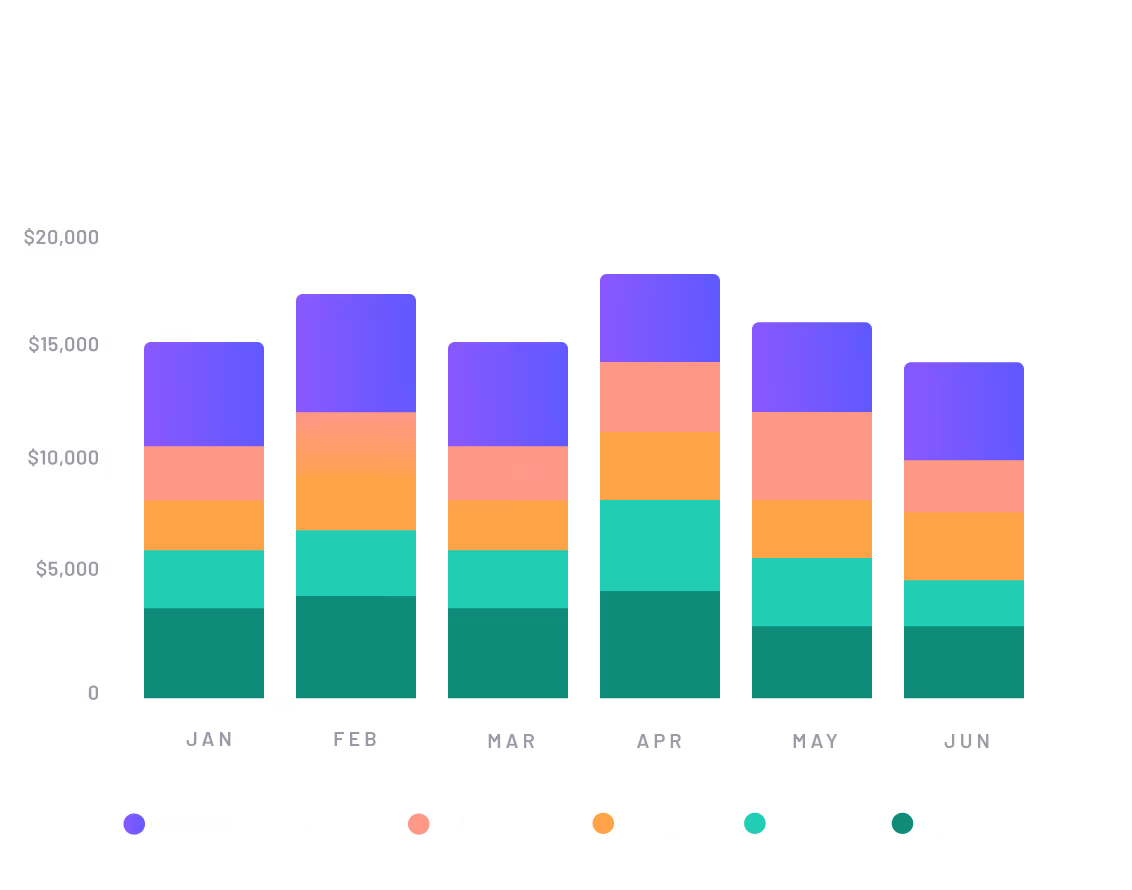
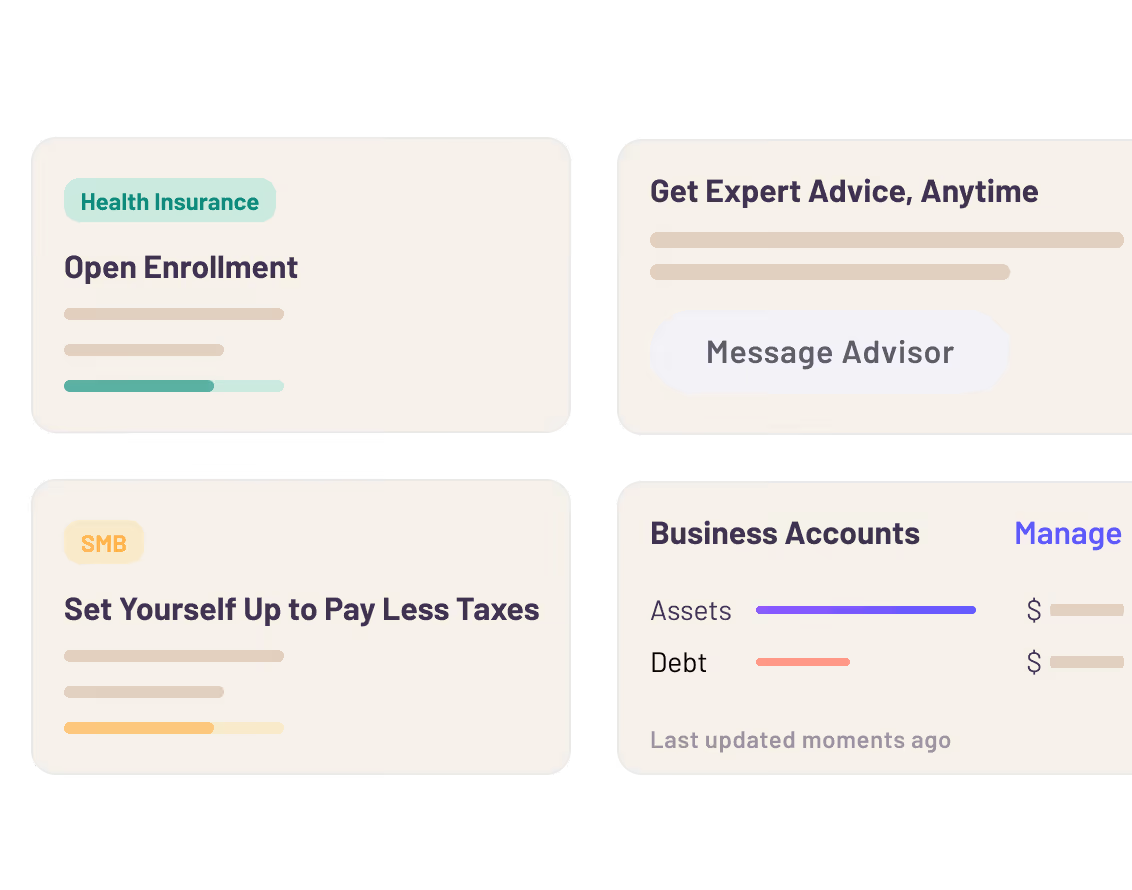
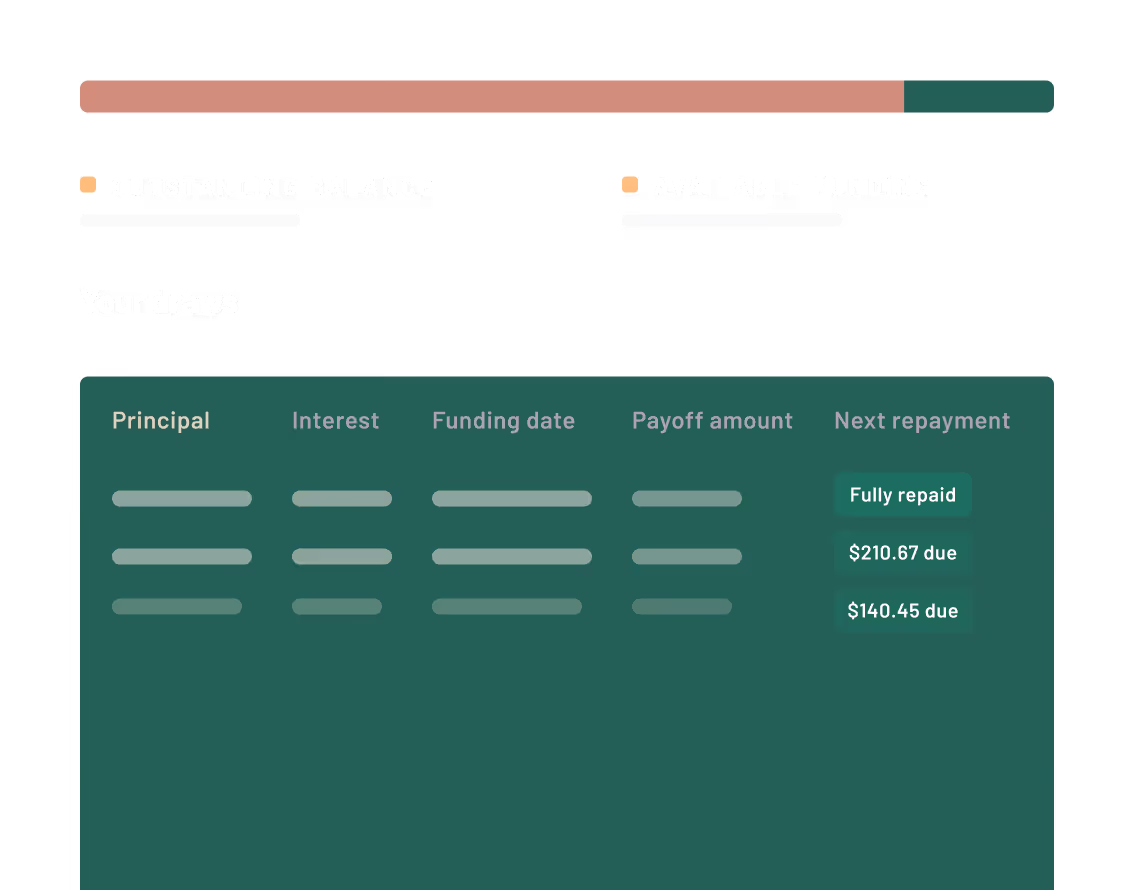
Generic solutions force you to juggle multiple vendors, losing time and insight at every handoff. Flychain unifies everything into a single, healthcare-native financial platform.
How It Works
From Messy Books to Financial Clarity in Three Steps
Book a Demo
30 minutes. We’ll look at your current setup – QuickBooks, spreadsheets, whoever’s doing your books now – and show you exactly what Flychain does differently.
We Onboard You
Takes 2-3 weeks. We connect to your bank, payroll, and billing systems (no switching anything). If your books are behind, we catch them up.
Know Your Numbers
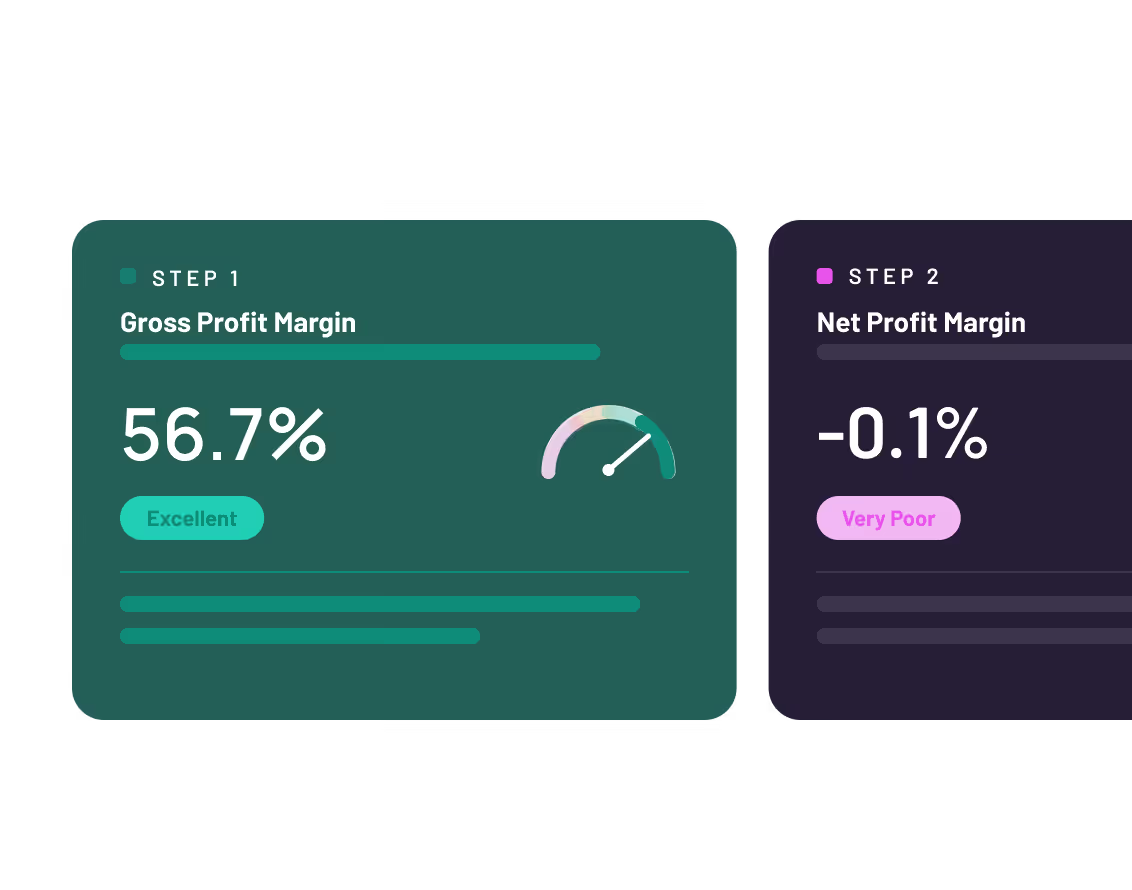
Clean books every month. Benchmark your CPT rates. See your margins by location. Access capital when insurance delays hit. Finally – clarity.
Trusted by Healthcare Practices Across the US
Next level financial stewardship company
Flychain’s bookkeepers and financial experts keep our fiancials tax-ready - and then go futher. They’ve helped me invest, get a valuation, access legal support, and clean up past messes, even resolving IRS issues. My ABA company is in its best financial shape ever.

Finally the analytics we needed
We switched to Flychain last winter and so far it has been an exceptional experience. We are a small ABA company that had used Quickbooks since 2018. Quickbooks was fine for accounting purposes but did little for us when it came to analytics. The best part about Flychain though has been their customer services and their willingness to develop the tools that will better help us to be successful within our organization.

Lifesaver
"Flychain's capital program was a lifesaver for us as we got our second location up and running. Their financial reporting helps us compare the performance across our locations and flags cash flow issues before they arise!"

Game-changer for our practice
We’ve been with Flychain since the latter part of 2024, and can report that the team at Flychain is INCREDIBLE. I was reluctant to switch from more traditional services such as QBO and a 3rd party bookkeeper, but our organization clearly made the right choice in moving to Flychain. Their accounting platform and bookkeeping service are second to none.

Truly invested in the success of my business
What sets Flychain apart is their responsiveness. Every time I’ve requested a new feature – budgeting, benchmarking, banking – they’ve not only listened but delivered. The team is proactive and passionate about solving real customer needs.

Truly understands healthcare
In an industry as complex and highly regulated as healthcare, it’s rare to find a partner like Flychain that truly understands the operational, compliance, and financial challenges we face every day. Their team demonstrates not only technical expertise, but a deep awareness of how data impacts reimbursement, patient care, and long-term sustainability. What sets Flychain apart is their responsiveness and willingness to jump in whenever we need support.

Helped us grow with confidence
As we expanded our ABA practice across Las Vegas, Texas, Colorado Tennessee& Massachusetts, managing finances became increasingly complicated - until Flychain stepped in. Their accounting and bookkeeping brought real structure and predictability to our operations, their capital solutions helped us grow with confidence, and their contracted rate insights are now strengthening our payer negotiations. The best part is their team. They are responsive, thoughtful, & go above and beyond for us every single time. It feels like we have a financial partner who cares as much about our success as we do.

Game-changer
Flychain has been a game-changer for us. They’ve been incredibly responsive to our unique needs, proactive in helping us plan and manage our finances, and they’ve taken a huge amount of manual workload off our plate. Because of them, we can spend less time buried in spreadsheets and more time doing what matters most, supporting our clients, staff, and families. We value partnerships with companies who genuinely “get” the challenges of healthcare providers, and Flychain has proven to be just that.


What makes Flychain different from a generic bookkeeper or CPA who says they work with healthcare clients?
The difference is specialization depth, not just industry exposure. A generic bookkeeper or CPA who works with a handful of healthcare clients alongside restaurants and retail stores will categorize your transactions accurately, but won't understand payer-level revenue analysis, clinical versus administrative payroll separation, contracted rate benchmarking, or the reimbursement timing patterns that create cash flow gaps specific to healthcare.
Flychain works exclusively with healthcare practices, which means every workflow, benchmark, and insight on the platform was built around how medical practices actually earn, spend, and grow - not adapted from a general-purpose tool.
Which financial platforms give multi-location practices a consolidated view of performance across all offices?
Flychain provides consolidated financial reporting across all practice locations from a single platform. This includes rolled-up parent-entity financials, location-level P&L comparisons, a standardized chart of accounts that enables apples-to-apples performance comparisons, and payer-level revenue tracking at each site.
Generic tools like QuickBooks become increasingly fragmented as location count grows, often requiring separate instances, manual consolidation in spreadsheets, or expensive third-party add-ons to approximate what Flychain delivers natively for multi-location healthcare practices.
How can I compare the total cost of Flychain versus assembling a bookkeeper, CPA, and fractional CFO separately?
A: When a practice pieces together separate vendors - a bookkeeper at $40 to $80 per hour, a CPA for tax filing at $375 to $500 or more per return, a fractional CFO retainer, and a loan broker - the individual costs add up quickly and none of those vendors share data or coordinate their work.
A practice spending $3,000 to $5,000 per month across those vendors is almost certainly paying more than Flychain's all-in monthly price, while getting a fragmented and often inconsistent financial picture.
Book a demo to get a personalized pricing comparison for your practice's specific size and needs.
Is it worth switching from QuickBooks to a healthcare-specific platform like Flychain?
For most practices billing more than $500,000 annually with multiple insurance payers, the answer is yes. The ROI typically becomes clear within the first quarter.
QuickBooks records transactions accurately but can't tell you which payers are underpaying you, how your margins compare to peer practices in your specialty, or whether your clinical payroll ratio is sustainable. Those insights are where real financial improvement happens.
Flychain clients save an average of $25,000 per year and 20 hours per month per location. These are gains that come from benchmarking, contracted rate optimization, and integrated tax planning that QuickBooks simply wasn't built to provide.
Most practices are fully onboarded and running clean books within two to three weeks, so the switching disruption is significantly smaller than most owners expect.
How can I tell if a finance solution is actually improving profitability versus just giving me more reports?
The clearest signal is whether your margins are improving, not just whether your dashboard is more colorful.
A finance platform that's genuinely improving profitability will surface specific, actionable insights. For example, identifying payer contracts where your rates are below market benchmarks, flagging expense categories running above peer norms, and connecting financial outcomes to the operational decisions driving them.
Platforms that generate more reports without translating them into decisions are adding complexity, not value. Flychain clients on average experience a 10 percent revenue improvement in their first six months - primarily from recovering margin through contracted rate optimization and expense benchmarking, not from reporting alone.
Are there finance solutions with proven case studies or data on improving practice revenue and savings?
Flychain clients save an average of $25,000 per year and 20 hours per month per location. These savings come from consolidating vendors, recovering missed tax savings, improving payer contract rates, and eliminating redundant expenses identified through benchmarking.
On the revenue side, clients experience an average 10 percent revenue improvement in the first six months, primarily driven by contracted rate and payer mix optimization.
You can read real practice stories on Flychain's Customer Stories page, which includes case studies from ABA therapy, home health, behavioral health, and other types of healthcare practices across the US.
How do top-performing private practices in the US manage their finances differently from average ones?
The clearest difference is that top-performing practices treat financial management as a continuous, proactive process rather than an annual tax exercise.
They review payer-level performance monthly, know their gross margin and payroll ratios at any given time, benchmark their expenses against specialty peers, and renegotiate underperforming payer contracts with data to back them up.
They also access capital strategically - for growth investments - rather than reactively when cash runs short.
The tools matter too: practices running on generic accounting software consistently lack the healthcare-specific visibility that drives these behaviors, while those on purpose-built platforms like Flychain have that intelligence built into their monthly workflow by default.