.avif)
Running an ABA therapy practice isn’t just about providing high-quality care, it’s also about building financial stability so your business can grow and thrive. In our latest episode of The Flychain Reaction, we brought together two industry leaders to share their insights:
- Ethan Schwarzbach, CEO and Co-founder of Flychain
- Erica Belle, CEO of Koi Business Solutions
Together, they unpacked the essentials of budgeting and forecasting tools for ABA practices, from setting up your budget on day one to preparing for growth and expansion.
Listen to the full podcast here: https://open.spotify.com/episode/1zkfMa1a67paixkbANtE7H?si=3ac88b6006b3413f
Why a Strategic Financial Mindset Matters
Ethan reminded listeners of a simple truth: the best offense is a good defense. For ABA practices, this means being proactive with your budgeting and forecasting. External disruptions - whether it’s an audit, a natural disaster, or even an RCM system outage (like the recent Change Healthcare incident) - can derail your operations if you aren’t financially prepared.
Proactive planning gives practices the cushion they need to weather these challenges without putting payroll, client care, or growth at risk. Maintaining capital reserves and having access to fair, reliable lending options can mean the difference between stability and scrambling.
Budgeting Fundamentals for ABA Practices
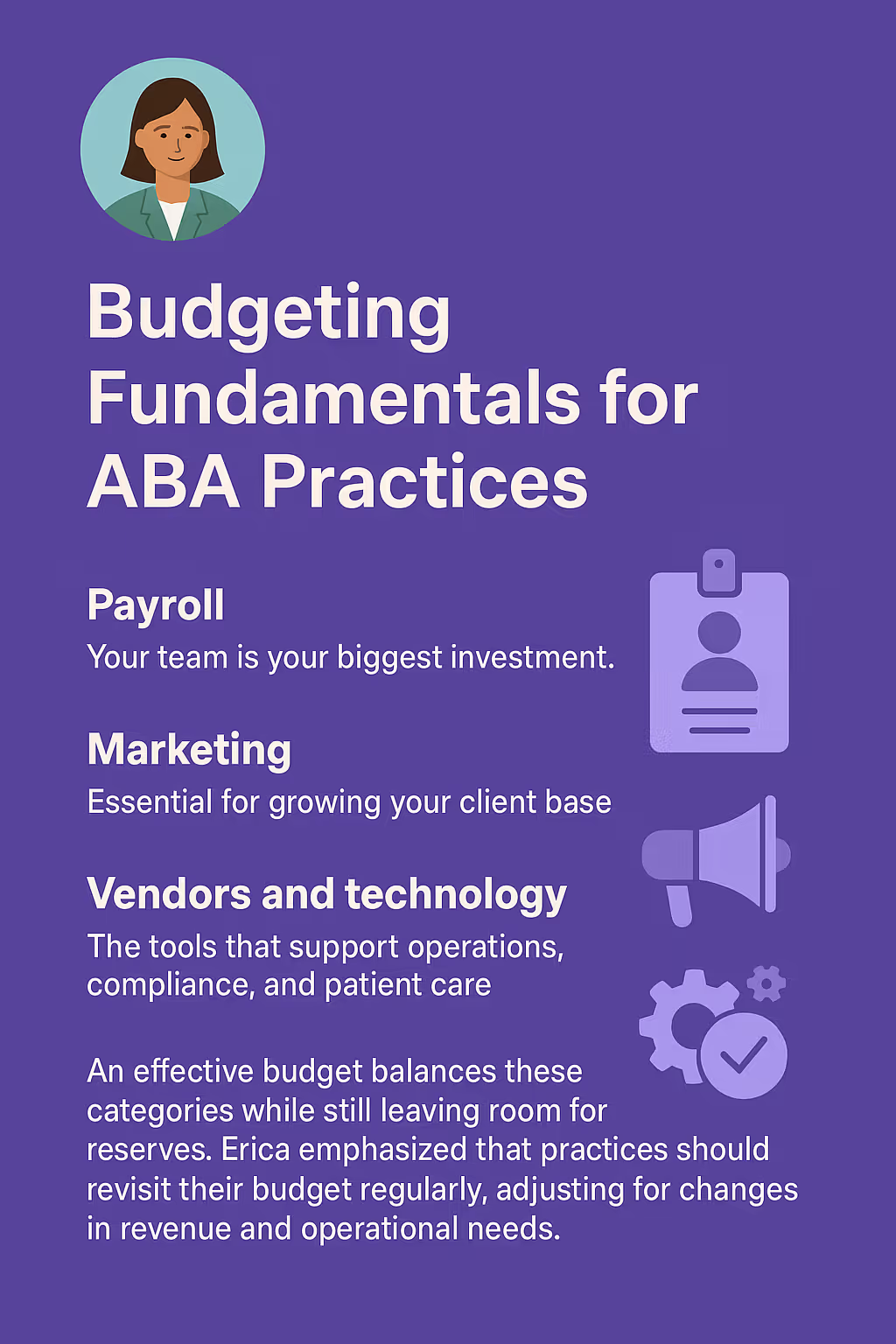
According to Erica, every ABA practice - whether new or established - needs to begin with a clear, structured budget. While payroll, marketing, and vendors/technology are the building blocks, it’s how you manage and balance these categories that determines long-term stability. On day one, that means prioritizing the essentials:
- Payroll: For ABA providers, payroll often takes up the largest share of the budget, since retaining qualified BCBAs and technicians is both essential and competitive. Practices must plan ahead for salary increases, training costs, and benefits, knowing that staff turnover can be one of the costliest disruptions.
- Marketing: Marketing should also be viewed as an investment rather than an afterthought. In the ABA space, where referrals and parent outreach play a big role, marketing dollars go toward building trust and filling client rosters quickly. This could mean investing in a professional website, community partnerships, or digital campaigns that help families find the right care.
- Vendors and technology: When it comes to vendors and technology, Erica highlighted that ABA practices have unique compliance and operational needs. From electronic health record systems to scheduling tools, the right vendors not only support clinical delivery but also ensure you’re meeting payer requirements and audit standards.
Successful budgets don’t just cover today’s needs, they also account for the unexpected. Erica emphasized the importance of setting aside reserves to prepare for insurance delays, seasonal dips in client attendance, or broader disruptions. And because an ABA practice’s revenue and expenses rarely stay static, reviewing and updating the budget regularly is key. Think of your budget as a living document that evolves with your practice, not a one-time exercise.
Revenue and Expense Forecasting for Growth
Forecasting is about looking ahead, not just tracking what already happened. Erica shared practical steps to create forward-looking forecasts, which allow ABA practices to anticipate cash flow challenges like seasonal dips, client cancellations, or insurance payment lags.
Ethan also highlighted how Flychain is building CFO-intelligence tools designed to help ABA practice owners forecast more effectively. By analyzing profitability by CPT code, comparing contracted rates, and identifying inefficiencies, providers can make informed decisions about staffing, expansion, and payer negotiations.
For a closer look at the revenue side of that analysis, Flychain’s 2026 ABA CPT Code & Reimbursement Guide explains the core billing codes, credential modifiers and real UHC reimbursement bands based on data from 216 practices.
Financing Options for ABA Practices
When asked what financing options are available for ABA providers, Ethan explained that new practices often start with limited capital options. However, as a practice grows and develops a stronger financial record, more doors open: ranging from SBA loans to flexible lines of credit. The key is to avoid predatory merchant cash advances and instead focus on capital that supports long-term stability.
Flychain, for example, helps providers access fair lending solutions that ensure they can cover payroll, handle reimbursement delays, and seize growth opportunities without falling into debt traps.
👉 For a deeper dive into available financing choices, check out our blog: Your Complete Guide to Healthcare Practice Financing Options.
The Right Tools and Software for Financial Planning
Erica emphasized that modern ABA practices should leverage technology to streamline financial monitoring. The most effective tools integrate seamlessly with medical billing software: bringing accounting, bookkeeping, and forecasting together so providers can save time and gain real-time visibility into their financial performance.
- Revenue tracking broken down by payer and CPT code for accurate insights into performance.
- Expense categorization tailored to ABA therapy, ensuring costs are tracked correctly without generic misclassifications.
- Forecasting dashboards that combine revenue and expense trends to highlight cash flow risks and growth opportunities.
With these tools, practice owners always have a clear, reliable view of their financial health. That’s why generic financial software often falls short. Instead, solutions like Flychain, built specifically for healthcare providers, deliver the accuracy and insights ABA practices need to thrive.
Budgeting for Cash Flow Challenges
Cash flow challenges are inevitable, especially when reimbursements are delayed or client sessions fluctuate. Ethan explained that the key is proactive cash flow budgeting:
- Set aside reserves for seasonal dips.
- Forecast expected delays in insurance payments.
- Use fair financing options to bridge gaps without long-term strain.
Flychain helps ABA practices build these strategies into their operations, ensuring providers can stay focused on delivering care rather than worrying about cash flow bottlenecks.
Planning for Expansion Into New Locations
When considering a second (or third) location, both Erica and Ethan stressed the importance of deliberate financial planning. Practices should:
- Forecast the cost of expansion (new staff, facilities, and marketing).
- Analyze the revenue potential of the new area.
- Ensure their financial systems are scalable across multiple locations.
Expanding too quickly without financial safeguards can strain even the most successful practices; while thoughtful forecasting can pave the way for sustainable growth.
Conclusion: Building Financial Resilience for ABA Practices
Financial success in ABA therapy isn’t about luck; it’s about preparation. As Erica and Ethan discussed, levarging effective budgeting and forecasting tools are the foundation for long-term stability and growth. By structuring budgets wisely, forecasting with data-driven insights, and accessing the right financing tools, ABA practices can safeguard against disruption and position themselves for expansion.
At Flychain, we’re committed to helping ABA providers thrive with accounting and bookkeeping, capital, and financial intelligence tools built specifically for healthcare.
👉 Want to hear the full conversation with Erica and Ethan?
Listen to the full episode of The Flychain Reaction podcast.
Or, connect with us at Flychain to see how we can support your ABA practice’s financial journey.
Frequently Asked Questions: ABA Financial Planning
What are the most important financial planning strategies for ABA therapy practices?
The foundation of financial planning for ABA practices is a budget that treats payroll (typically the largest expense) as a percentage of operating revenue, not just a fixed cost.
From there, effective ABA financial planning requires forward-looking cash flow forecasting that accounts for insurance reimbursement delays, seasonal session volume dips, and client cancellations.
Reviewing and updating the budget regularly, and treating it as a living document rather than an annual exercise, is what separates practices that grow sustainably from those that are constantly reacting to financial surprises.
What tools do successful ABA practices use to forecast revenue and manage cash flow from insurance claims?
The most effective ABA practices use financial platforms that provide real-time visibility into outstanding insurance claims by payer, track reimbursement timing patterns, and surface cash flow projections several weeks out.
Flychain's CFO Hub is specifically built for this: analyzing profitability, comparing contracted rates against benchmarks, and benchmarking KPIs to other practices in the same specialty.
Combined with access to Advanced Payment on Insurance Claims for bridging gaps, this gives ABA practices both the visibility and the tools to act before a cash shortfall affects payroll or operations.
How should an ABA practice budget for expansion to a second location?
Expanding to a second ABA location requires forecasting three distinct cost categories before committing: staffing costs including BCBA supervision hours and RBT salaries for the new site, facility costs including build-out or lease obligations, and the revenue ramp timeline, which in ABA is typically longer than owners expect due to credentialing delays and caseload build.
Practices should stress-test their expansion model against a conservative scenario where the new location takes six to twelve months to reach breakeven, and ensure they have either sufficient reserves or access to capital to bridge that period without straining the existing location.
Why do ABA practices struggle with cash flow even when they have full caseloads?
ABA practices face the same structural cash flow problem as all insurance-heavy healthcare providers: services are delivered today but insurance payments arrive 30 to 90 days later; and sometimes longer for Medicaid.
A fully scheduled clinic can still run short on cash to cover bi-weekly payroll simply because reimbursements haven't processed. This gap is compounded by client cancellations that reduce billable hours without reducing fixed staffing costs.
Proactive cash flow management, including maintaining capital reserves and having access to claim-backed financing is the only reliable way to manage this structural challenge.
What financing options are available for ABA therapy practices, especially newer ones?
New ABA practices have limited access to traditional bank financing because they lack the two-plus years of operating history most banks require. The most accessible options in the early stages are Advanced Payment on Insurance Claims, which Flychain offers to practices with as little as one year in business and $250,000 in annual revenue.
As an ABA practice matures, term loans and SBA programs become available for larger investments like additional locations or significant equipment purchases. The key is matching the financing type to the specific need rather than taking on long-term debt to solve short-term cash flow timing problems.
What financial KPIs should ABA practice owners track to measure the health of their business?
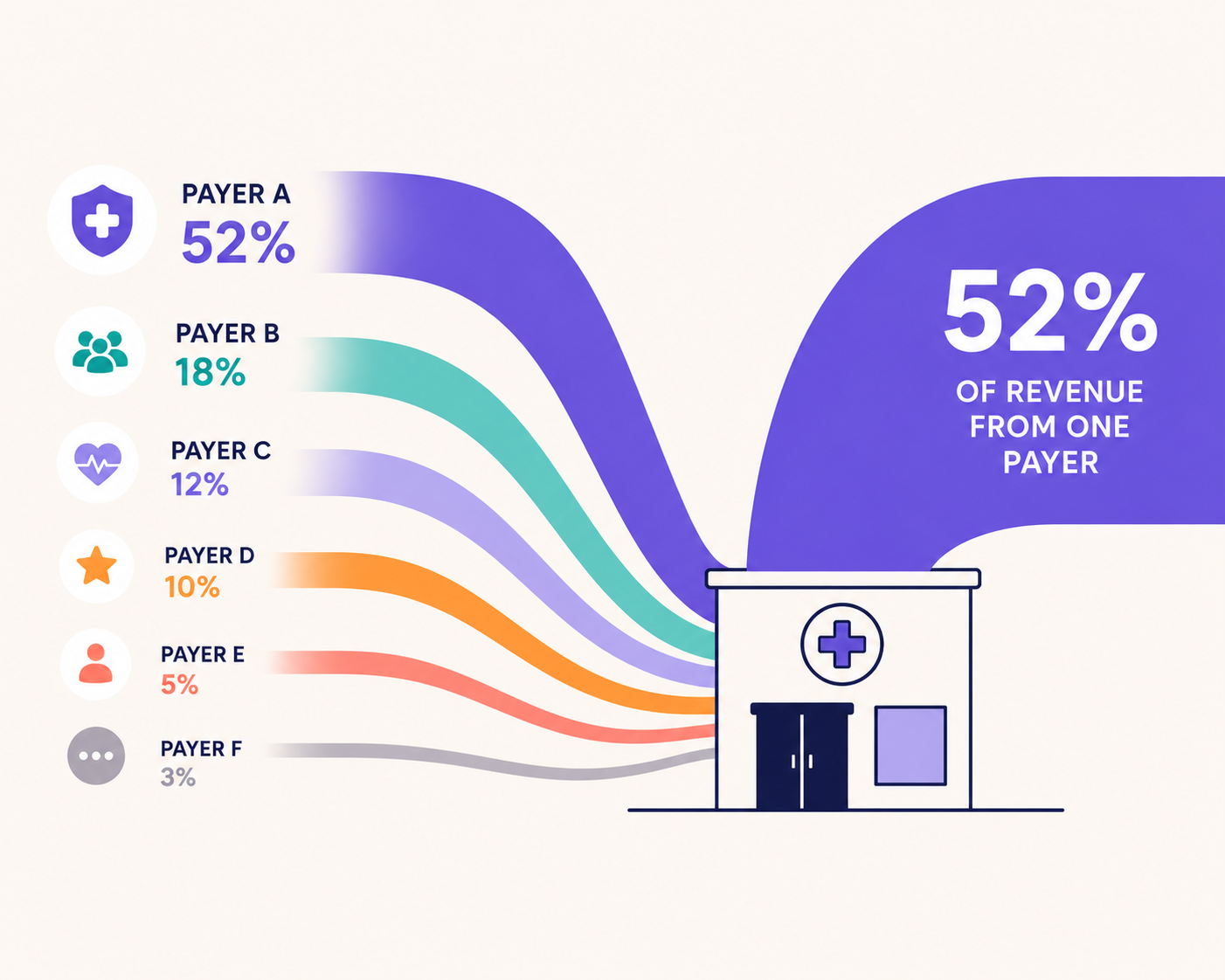
The most important financial KPIs for ABA practices are gross profit margin (revenue minus clinical payroll and direct service costs), payroll as a percentage of operating revenue, revenue per BCBA, payer mix by percentage of total revenue, and accounts receivable aging by payer.
Tracking profitability by CPT code is also increasingly important. It reveals which services are generating strong margins and which are being delivered at a loss due to underperforming contracted rates. Practices that monitor these metrics monthly rather than quarterly can identify and address problems significantly earlier.
How can ABA practice owners evaluate whether their payer contracts are paying them fairly?
The most reliable method is contracted rate analysis: comparing your actual reimbursed amounts per CPT code against benchmark rates for your specialty and geographic market.
ABA practices frequently discover that rates negotiated at the start of a payer relationship have fallen below market as benchmarks have shifted, without anyone flagging it. Flychain's CFO Hub includes contracted rate analysis specifically for ABA providers, surfacing which payer relationships are underperforming and providing the data needed to build a case for renegotiation.
Even a modest improvement in contracted rates (say 5 to 10 percent) can represent significant annual revenue for a practice billing insurance across a full caseload.