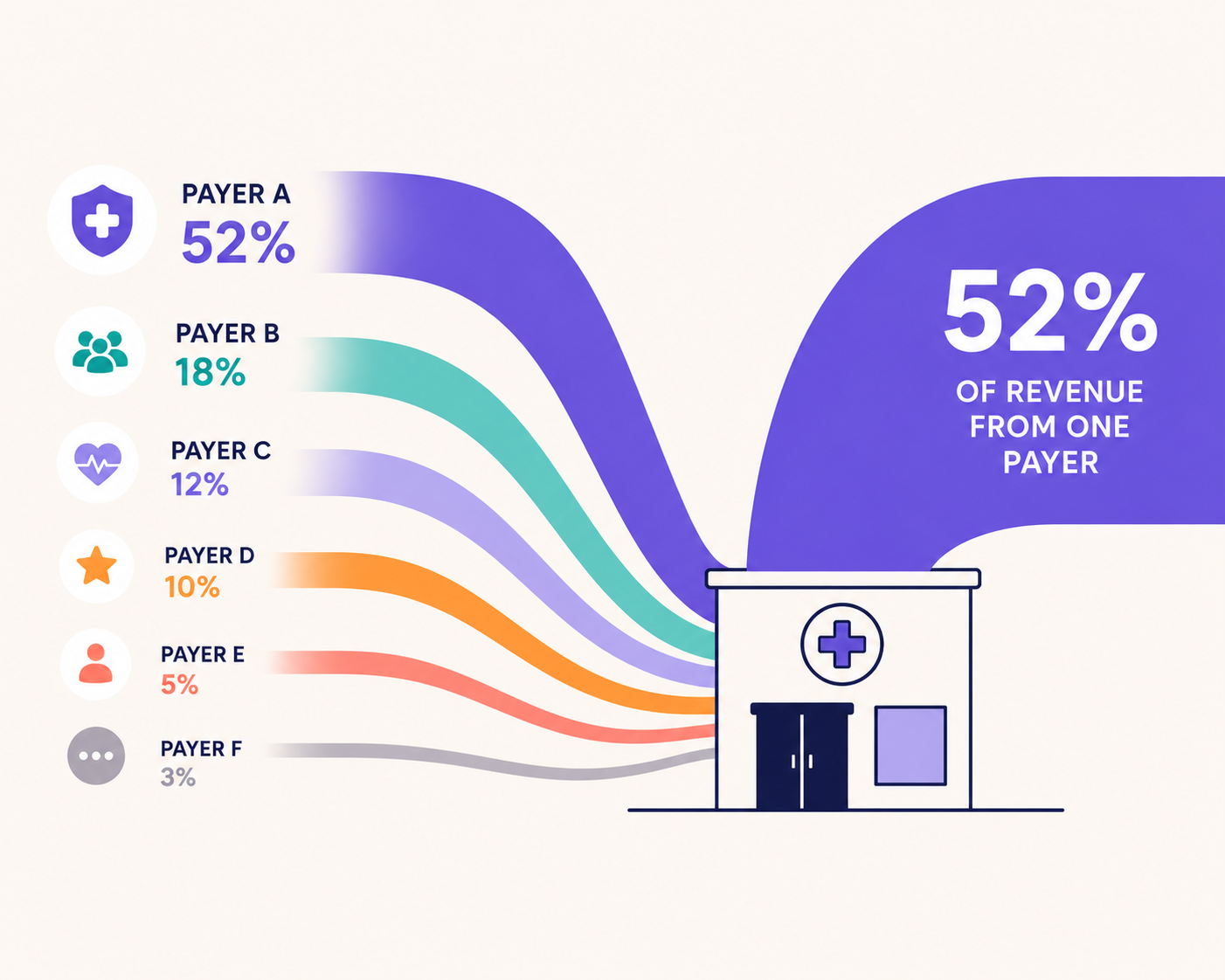
.png)
If you run an independent healthcare practice, you already know that payroll is your biggest expense.
You have healthcare payroll software processing checks on time, handling tax withholdings, and keeping your staff paid. So far, so good.
But here's the problem most practice owners don't realize until it's too late: knowing what you paid in payroll is not the same as knowing what labor is costing your business.
Payroll software tells you the number. It doesn't tell you what that number means - whether your staffing costs are eating into your margins, whether you're profitable by location or service line, or whether your compensation structure is sustainable as you grow.
In this article, we'll show you why healthcare payroll software is a critical piece of the puzzle, but only a piece.
We'll walk through the gap between payroll data and financial clarity, what true labor cost visibility looks like, and how connecting workforce operations with healthcare-specific bookkeeping and CFO intelligence changes the picture entirely.

The Role of Healthcare Payroll Software and Where It Stops
Healthcare payroll software solves a real and complex problem.
Running payroll for a healthcare practice isn't like running payroll for a restaurant or a retail shop. You're dealing with:
- Multi-state licensing and compliance requirements
- Credentialing and certification tracking for clinical staff
- Complex pay structures: hourly, salaried, per-visit, blended
- Healthcare-specific benefit deductions and PTO rules
- Strict regulatory requirements around overtime and documentation
Purpose-built platforms like Viventium - a leading provider of payroll, HR, and compliance solutions for healthcare organizations - are purpose-built for exactly this.
Viventium handles the operational complexity of healthcare workforce management: multi-state payroll, credentialing, regulatory compliance, and the administrative overhead that comes with managing clinical and non-clinical staff under one roof.
That's incredibly valuable. But the moment your payroll run is complete, most healthcare payroll software stops.
The data lives in the payroll system. It doesn't automatically connect to your P&L. It doesn't tell you your labor cost as a percentage of revenue. It doesn't show you whether one clinic location is running lean while another is dangerously overstaffed.
The payroll software knows what you paid. It doesn't tell you what it means.
Want to see what your labor costs are actually doing to your margins? Book a free consultation with Flychain.
Why Healthcare Workforce Management Is a Financial Problem
For most independent healthcare practices, labor represents 50–70% of total operating costs. That's not just the largest single expense… it's the expense with the most variables, the most moving parts, and the most potential to quietly erode profitability.
Healthcare workforce management is usually thought of as an HR and operations function: hiring, scheduling, compliance, retention.
But at its core, it's a financial challenge. Every staffing decision you make: a new hire, a raise, a shift in care model - has a direct impact on your margins.
Here are the questions that matter most for financial sustainability and that most practices can't answer clearly without connecting workforce data to their financials:
What is my actual labor cost per visit or per service line?
Your payroll software knows total payroll dollars. Your billing system knows revenue. But without connecting the two through clean bookkeeping and cost allocation, you can't calculate true labor cost per unit of care. This means you can't price services accurately or evaluate whether a service line is profitable.
Which locations are running efficiently and which aren't?
Multi-location practices often have wildly different staffing ratios by site.
Healthcare payroll software will show you total headcount and payroll by location. But without tying that to location-level revenue and overhead, you can't tell which locations are carrying the others and which represent real growth opportunities.
Can I afford to hire and what's the right timing?
Healthcare workforce management decisions like adding a new clinician or expanding into a new service line require understanding your cash position, your current margins, and your projected revenue.
Payroll software doesn't have that context. A healthcare CFO or CFO-level financial intelligence does.

The Gap Between Payroll Data and Financial Clarity
The problem isn't that healthcare payroll software is inadequate. It's that it was never designed to answer financial questions. It was designed to answer operational ones.
This creates a gap that plays out in predictable ways across independent practices:
The 'we're growing but margins are shrinking' problem
Revenue is up. Headcount is up. But profitability is flat or falling.
Without a clear connection between payroll costs and financial performance, it's almost impossible to diagnose whether you're overstaffed, underpriced, or simply scaling faster than your infrastructure can handle.
The 'I don't know what a new hire actually costs' problem
Most practice owners know salary. Few know total loaded labor cost: salary plus benefits, payroll taxes, training time, and the effect on overhead allocation.
Healthcare payroll software captures salary and benefits. Only a connected financial system shows you the true cost.
The 'we passed audit but I still can't read our financials' problem
Healthcare-specific payroll compliance - handled beautifully by platforms like Viventium - is not the same as healthcare financial clarity.
You can be fully compliant and still have no idea whether your practice is on a path to sustainable growth.
What bridges this gap is connecting your payroll and HR data with clean, healthcare-specific bookkeeping, tax strategy, working capital, and CFO-level intelligence.
That's exactly what the Flychain and Viventium partnership is built to deliver.
Stop flying blind on labor costs. Flychain gives independent healthcare practices the financial clarity their payroll software can't. See Flychain in Action.
Flychain + Viventium: Connecting Workforce Operations to Financial Performance
Flychain and Viventium have announced a strategic partnership designed specifically to close this gap for independent healthcare practices.
Viventium brings healthcare-specific payroll, HR, and compliance infrastructure - the operational foundation that ensures your workforce runs accurately and in compliance.
Flychain brings healthcare-specific bookkeeping, tax planning, working capital, and CFO-level intelligence - the financial layer that turns workforce data into business insight.
Together, the partnership creates four connected capabilities that independent practices typically don't have access to:
1. Clear visibility into true labor costs
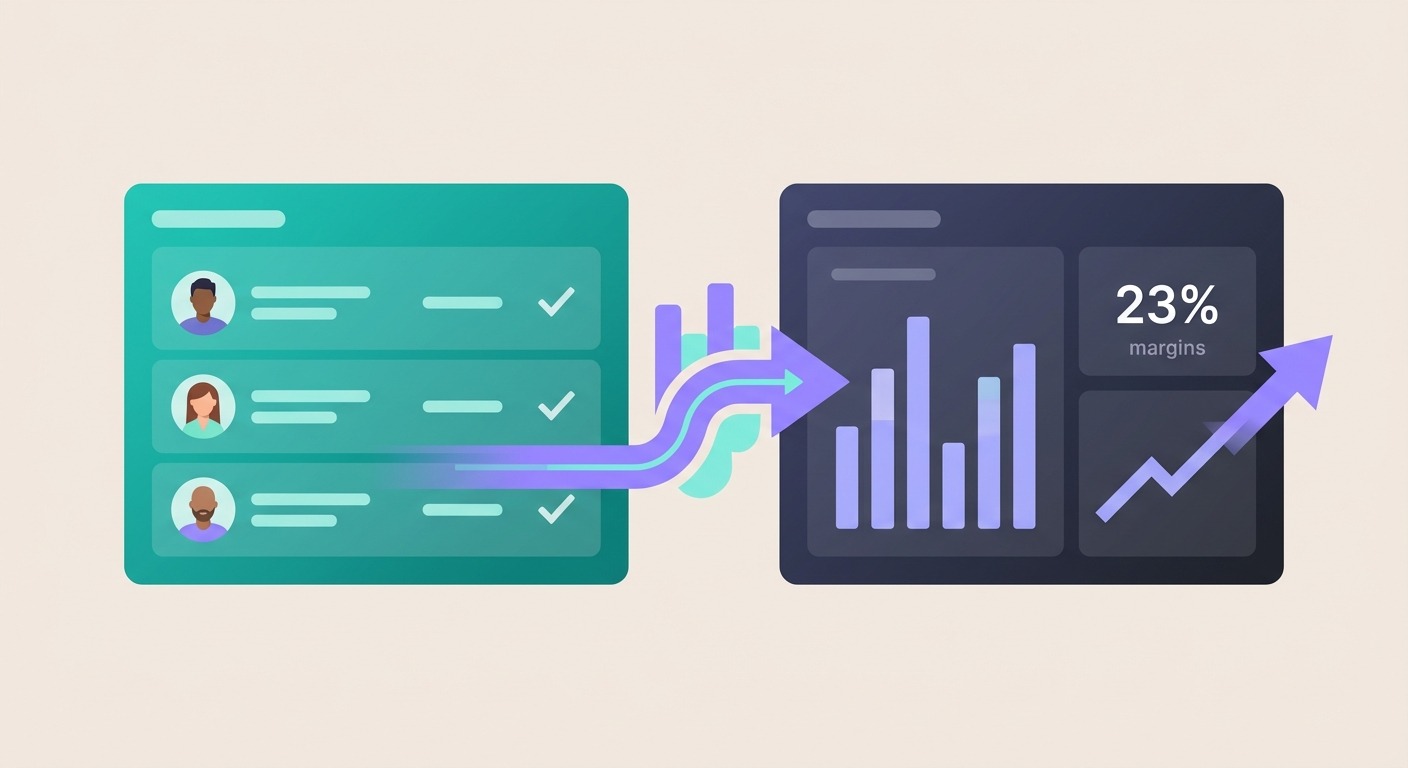
Healthcare payroll software tracks what you paid. Flychain's bookkeeping ties that to your P&L, allocates costs by location and service line, and surfaces what labor is actually costing your practice relative to revenue.
The result: a complete picture of staffing costs and their impact on margins. Not just a payroll run.
2. Granular analytics for financial decision-making
Providers can understand profitability by provider, location, and service line. This makes healthcare workforce management decisions like hiring, compensation, and expansion, data-driven rather than gut-driven.
When you know which parts of your practice are profitable and why, you make better calls on where to invest in people.
3. Compliance plus operational efficiency
Viventium's platform ensures payroll accuracy and regulatory compliance, reducing administrative burden on your operations team.
Combined with Flychain's bookkeeping and tax strategy, practices get both sides of the equation: the workforce runs cleanly, and the financials are accurate.
4. A connected financial foundation for sustainable growth
When healthcare payroll data, clean books, and CFO-level insights are aligned, practice owners gain something most never have: the clarity to plan confidently.
Whether you're evaluating a new hire, expanding to a second location, or thinking about your exit strategy, financial clarity changes every conversation.
"Labor is the largest and most important investment for healthcare providers, but it's often the least clearly understood from a financial perspective," said Ethan Schwarzbach, CEO & Co-Founder of Flychain. "Viventium gives practices the tools to manage their workforce effectively, and Flychain turns that data into financial clarity so owners can understand true labor costs, profitability, and how to scale sustainably."
Who Benefits Most From This Partnership
This partnership is designed specifically for independent healthcare practices. Practices that are large enough to have real workforce complexity, but not so large that they have a dedicated finance team to stitch these systems together manually.
The practices that benefit most tend to share a few characteristics:
- ABA therapy practices with multiple clinicians, complex scheduling, and a mix of full-time and part-time staff; where understanding labor costs per client or per service line is critical to profitability
- Home health and behavioral health providers navigating multi-state operations, credentialing requirements, and high staff turnover; where payroll compliance and financial visibility are both ongoing challenges
- Multi-location practices that need to understand performance by site, not just in aggregate; where the same healthcare workforce management decisions can have very different financial outcomes in different markets
- Growth-stage practices planning to add staff, expand services, or pursue healthcare practice financing; where having clean books and a clear picture of labor costs is essential to making the right decisions at the right time
If you're currently using healthcare payroll software to manage your workforce but relying on spreadsheets, a general bookkeeper, or end-of-year tax returns to understand your financial performance - this partnership is built for you.

How This Compares to Going It Alone
Most independent healthcare practices cobble together their financial and workforce operations from a mix of tools; often with little connection between them.
Here's what that typically looks like versus what the Flychain and Viventium partnership provides:
The tools in the left column (QuickBooks Payroll, Gusto, Paychex, ADP) were built for general small businesses, not for healthcare.
They'll process your payroll. They won't tell you whether your ABA therapy clinic is profitable by caseload size, or whether your home health staffing model can support a second market.
Frequently Asked Questions
What is healthcare payroll software, and how is it different from general payroll software?
Healthcare payroll software is purpose-built for the unique workforce requirements of healthcare organizations. This includes multi-state payroll processing, clinical credentialing tracking, complex pay structures (hourly, per-visit, blended), and healthcare-specific regulatory compliance.
General payroll platforms like Gusto or Paychex handle basic payroll functions but lack the healthcare-specific features needed for ABA therapy, home health, and behavioral health providers.
Why isn't healthcare payroll software enough on its own?
Healthcare payroll software tells you what you paid in wages, benefits, and taxes. It doesn't show you what those costs mean for your margins, profitability by service line, or financial sustainability.
Without connecting payroll data to clean bookkeeping and financial reporting, practice owners lack the context to make informed decisions about hiring, compensation, and growth.
What is healthcare workforce management?
Healthcare workforce management refers to the full set of processes and tools used to manage staff in a healthcare organization. This includes recruiting, scheduling, credentialing, payroll, compliance, and HR administration.
It's both an operational and financial function: every workforce decision has a direct impact on margins, cash flow, and profitability.
How does connecting payroll with financial management help healthcare practices?
When healthcare payroll data is connected to bookkeeping and CFO-level financial reporting, practice owners can see their true labor costs; not just total payroll dollars, but labor as a percentage of revenue by location, service line, and provider.
This enables more informed decisions around hiring, compensation, and expansion, and gives practices the financial clarity to grow sustainably.
What types of healthcare practices benefit most from integrated payroll and financial management?
Independent practices with workforce complexity benefit most; particularly ABA therapy practices, home health agencies, and behavioral health providers with multi-state operations or multi-location footprints.
Growth-stage practices planning to hire or expand are also strong candidates, since financial clarity is essential to making those decisions at the right time.
What is the difference between payroll compliance and financial clarity in healthcare?
Payroll compliance means your payroll is accurate, taxes are withheld correctly, and you're meeting regulatory requirements - an area where platforms like Viventium excel.
Financial clarity means you understand what your workforce costs are doing to your profitability, cash flow, and margins. Both matter, but they require different tools. Compliance without clarity means you're running clean payroll while flying blind on your financial performance.
How does the Flychain and Viventium partnership work for independent healthcare practices?
The Flychain and Viventium partnership combines Viventium's healthcare-specific payroll, HR, and compliance platform with Flychain's healthcare-specific bookkeeping, tax strategy, working capital, and CFO intelligence.
Together, they give independent healthcare practices a connected financial and workforce foundation, so that payroll data feeds into financial reporting, labor costs are visible at the practice level, and owners have the clarity to make informed decisions about their workforce and their growth.
Your Payroll Software Is Running. Is Your Practice?
The practices that scale sustainably aren't just the ones with great care delivery.
They're the ones that know their numbers: not just healthcare payroll numbers, but the full financial picture that tells them whether their workforce investment is working.
Healthcare payroll software is an essential operational tool. But operational clarity and financial clarity are different things.
If you know what you paid your team last month but can't tell whether that investment is helping your practice grow or quietly compressing your margins, there's a gap worth closing.
The Flychain and Viventium partnership exists to close it. Viventium keeps your workforce running compliantly and efficiently.
Flychain turns that workforce data into financial insight so you can see true labor costs, understand profitability by location and service line, and build a practice that's not just growing, but growing on solid financial ground.
Ready to see what your labor costs are actually doing to your practice's financial health?
Book a free consultation with Flychain today and get the clarity your payroll software can't give you.
Author: The Flychain Team
About Flychain: Flychain is the financial control tower for running a stronger practice. Flychain's all-in-one financial platform combines Healthcare Bookkeeping, CFO Intelligence, Taxes, and Capital - built for small to medium-sized independent healthcare practices.