Before you talk to a broker or entertain a buyer, the single biggest lever on your final sale price is the state of your finances. Clean books, accurate P&Ls, and clear EBITDA visibility don't just make due diligence easier; they directly determine what buyers are willing to pay.
This guide walks you through what drives medical practice valuation, what buyers look for, and how to prepare your financials for the best possible outcome. You can also listen to our podcast episode here.
Selling a medical practice is one of the most significant financial decisions you'll make as a healthcare business owner. Whether you're planning to retire, transition to a new venture, or simply ready for the next chapter, understanding medical practice valuation and the sale process is critical to achieving the best outcome for you, your staff, and your patients.
According to industry experts, practice owners should begin preparing for a sale at least 2-3 years in advance to maximize valuation and ensure a smooth transition. This comprehensive guide walks you through everything you need to know about selling a medical practice, from understanding buyer types to preparing your practice for sale.
Medical Practice Valuation: How Much Is Your Practice Worth?
One of the first questions practice owners ask is: "What's my practice actually worth?" Medical practice valuation is both an art and a science, influenced by multiple factors including revenue, profitability, payer mix, location, and growth potential.
Key Valuation Factors
Medical business sales typically evaluate practices based on:
- EBITDA (Earnings Before Interest, Taxes, Depreciation, and Amortization): This is often the foundation of healthcare mergers and acquisitions valuations
- Revenue multiples: Practices are often valued at 0.5x to 2x annual revenue, depending on specialty and profitability
- Patient base quality: Active patient count, retention rates, and demographic trends
- Payer mix: Higher commercial insurance ratios typically command better valuations than Medicare/Medicaid-heavy practices. Read our guide to check if you’re getting underpaid by payers.
- Growth trajectory: Consistent year-over-year revenue growth significantly impacts valuation
- Operational efficiency: Strong margins and streamlined operations increase value
Most medical practices sell for 3-6x EBITDA, though specialty-specific factors and market conditions can push valuations higher or lower. For example, dermatology and ophthalmology practices often command premium multiples due to favorable reimbursement models and growth potential.
Pro tip: Start tracking these metrics now, even if you're years away from selling. Clean, organized financial data dramatically improves both your valuation and buyer confidence during due diligence.
Want to see if you’re leaving money on the table?
Get a free financial assessment from our healthcare accounting experts.
What Buyers Actually Scrutinize in Your Books
Valuation multiples are only as good as the financial records behind them. When a serious buyer or their accountant sits down for due diligence, here's what they're looking at; and what kills deals:
Clean, consistent P&L statements. Buyers want to see at least 3 years of profit and loss statements that are organized, consistent, and on accrual-basis accounting. Cash-basis books almost always get discounted because they obscure the true picture of revenue timing and liabilities.
Documented EBITDA with clear add-backs. Buyers will reconstruct your EBITDA themselves. Any owner perks, one-time expenses, or personal costs running through the business need to be clearly documented and defensible. Not buried or unexplained.
Payer mix breakdown. A clean breakdown of revenue by payer (commercial insurance vs. Medicare/Medicaid vs. self-pay) tells buyers immediately how stable and scalable your revenue is. If you can't produce this on demand, that's a red flag.
Monthly close discipline. Practices that close their books monthly and can produce financials within two weeks of month-end signal operational maturity. Buyers notice when books are always a quarter behind.
At Flychain, we work with healthcare practices specifically on this kind of financial infrastructure: clean books, monthly close calls, real-time P&L visibility, and payer-level reporting. This way, when you're ready to sell, your numbers tell the best possible version of your story. See how Flychain's bookkeeping services and CFO Hub work →
Understanding the Medical Business Sales Landscape: Types of Buyers
When selling a medical practice, you'll encounter three primary buyer categories, each with distinct advantages, considerations, and motivations. Understanding these differences is essential for finding the right strategic partner.

Strategic Buyers: Local Competitors and Health Systems
Strategic buyers are typically larger healthcare organizations, hospital systems, or regional practice groups operating in your market. They know your specialty, understand local healthcare dynamics, and can often integrate your practice seamlessly into their existing operations.
Advantages:
- Deep understanding of your specialty and local market
- Established infrastructure for smooth operational integration
- May offer immediate access to resources and referral networks
Considerations:
- Your practice will be absorbed into a larger organization
- Less control over legacy preservation and employee retention
- Cultural fit varies significantly by organization
- May prioritize cost-cutting through consolidation
Strategic buyers work well for practice owners who are comfortable joining a larger entity and value the stability of an established healthcare system.
Private Equity and Venture Capital: Financial Buyers
Private equity (PE) has become increasingly active in healthcare mergers and acquisitions, particularly in high-growth specialties like dermatology, gastroenterology, orthopedics, and ophthalmology. These financial buyers seek to acquire multiple practices, build scale, and eventually sell to a larger PE firm.
Advantages:
- Often willing to pay premium valuations for the right practices
- Can provide capital for growth initiatives
- May offer equity rollover opportunities for ongoing upside
Considerations:
- Primary focus is financial returns, not necessarily clinical excellence
- Typically implement aggressive cost-cutting measures
- High turnover in non-essential staff is common
- May reduce clinical autonomy through standardized protocols
- Exit timeline is typically 3-7 years, leading to another sale
The reputation of private equity in healthcare is mixed. While some PE-backed groups maintain high clinical standards, research has shown that some PE acquisitions correlate with reduced quality metrics and patient satisfaction. Due diligence on the specific PE firm's track record is essential.
Search Funds: The Entrepreneur Buyer
Search funds represent a unique category in medical business sales. A search fund is an individual entrepreneur (often an MBA graduate or former healthcare executive) backed by investors who is seeking to acquire and operate a single business for their entire career.
Advantages:
- Complete dedication to your single practice (not one of many in a portfolio)
- Strong focus on legacy preservation and employee retention
- Personal relationship with an owner-operator, not a distant corporation
- Flexible transition timelines based on your needs
- Deep commitment to learning your business and maintaining culture
Considerations:
- Buyer may be younger or less experienced than PE/strategic buyers
- Typically need 6-12 months of intensive transition support
- May have less immediate capital for aggressive expansion
- Success depends heavily on the individual entrepreneur's capabilities
Search fund buyers often align well with practice owners who value legacy, want to ensure their team is cared for, and prefer working with a dedicated individual rather than a faceless corporation.
Comparing Buyer Types: Which Is Right for Your Practice?
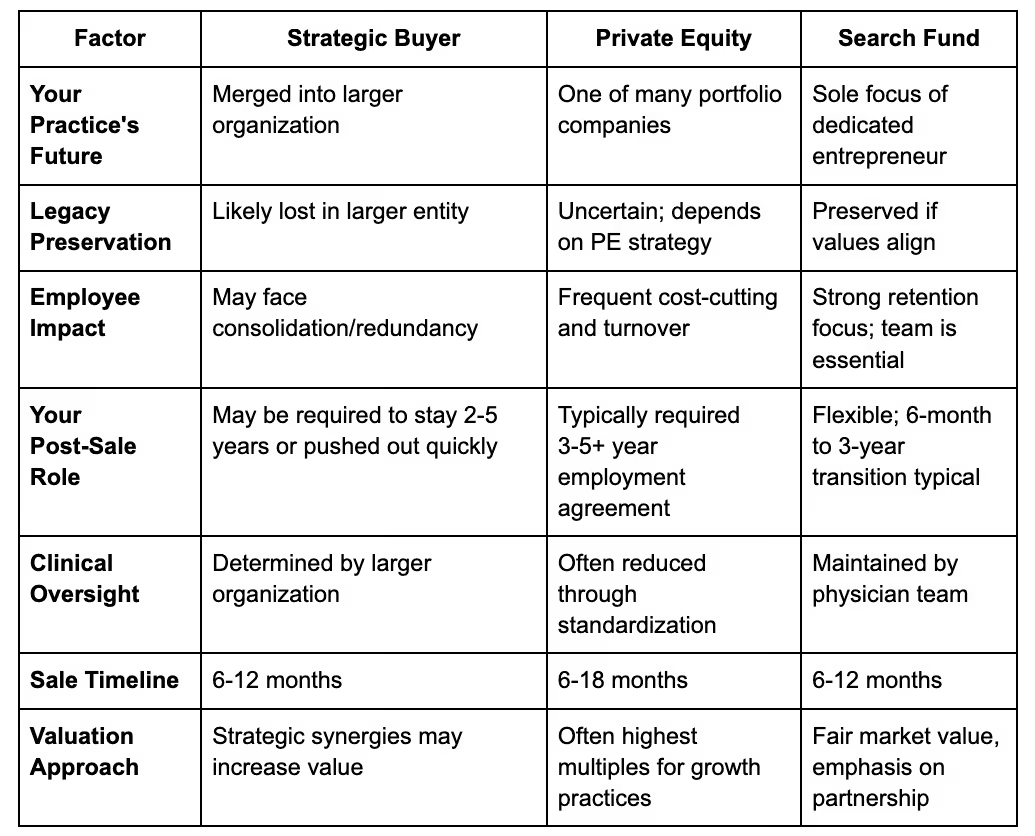
When selling a medical practice, there's no universally "best" buyer type. The right choice depends on your priorities: Are you most concerned about legacy? Employee welfare? Maximizing valuation? Retirement timing? Your post-sale involvement?
Critical insight: The best transactions happen when the seller clearly defines their priorities before entering discussions. Sit down with your spouse or key advisors and rank what matters most to you. This clarity will guide your buyer selection and negotiation strategy.
How Buyers Create Value: Understanding the Growth Playbook
Sophisticated buyers in healthcare mergers and acquisitions evaluate practices through a "value creation" lens. Understanding how buyers plan to grow your practice helps you evaluate their plans and, if you're rolling over equity, assess your potential upside.
The Five Pillars of Value Creation
1. Revenue Growth: The most common growth strategy, particularly for search funds and some PE buyers, focuses on expanding top-line revenue through:
- Minimizing patient churn: Improving patient experience and retention
- Expanding wallet share: Adding complementary services that serve existing patients better
- Market penetration: Reaching more patients with existing services in current markets
- Market expansion: Opening new locations or entering adjacent geographic markets
- Product/service expansion: Launching new specialties or service lines
- Pricing optimization: Negotiating better reimbursement rates with payers (often requires scale)
2. Margin Expansion: Common with strategic and PE buyers, this approach focuses on improving profitability through cost reduction:
- Streamlining staffing and eliminating redundancies
- Negotiating better rates with vendors and suppliers
- Implementing more efficient operational processes
- Reducing overhead through shared services
3. Multiple Expansion: Increasing the relative valuation through:
- Building a track record of consistent growth
- Reducing business risk and customer concentration
- Improving operational metrics that buyers value
- Creating competitive tension among potential future buyers
4. Strategic Acquisitions: Many buyers, particularly PE groups, pursue a "roll-up" strategy:
- Acquiring smaller practices to build market density
- Achieving economies of scale
- Creating a regional or national platform for eventual sale
5. Debt Paydown: Simply paying down acquisition debt over time to build equity value.
Key takeaway: Strategic and PE buyers often emphasize margin expansion (cost-cutting), while search funds typically focus on revenue growth and strategic acquisitions. Understanding a buyer's value creation thesis helps you evaluate whether their plan aligns with your vision for the practice's future.
Preparing Your Practice for Sale: A 2-3 Year Timeline
The most successful medical practice sales don't happen overnight. Practice owners who plan 2-3 years ahead consistently achieve higher valuations and smoother transitions. Here's how to prepare:
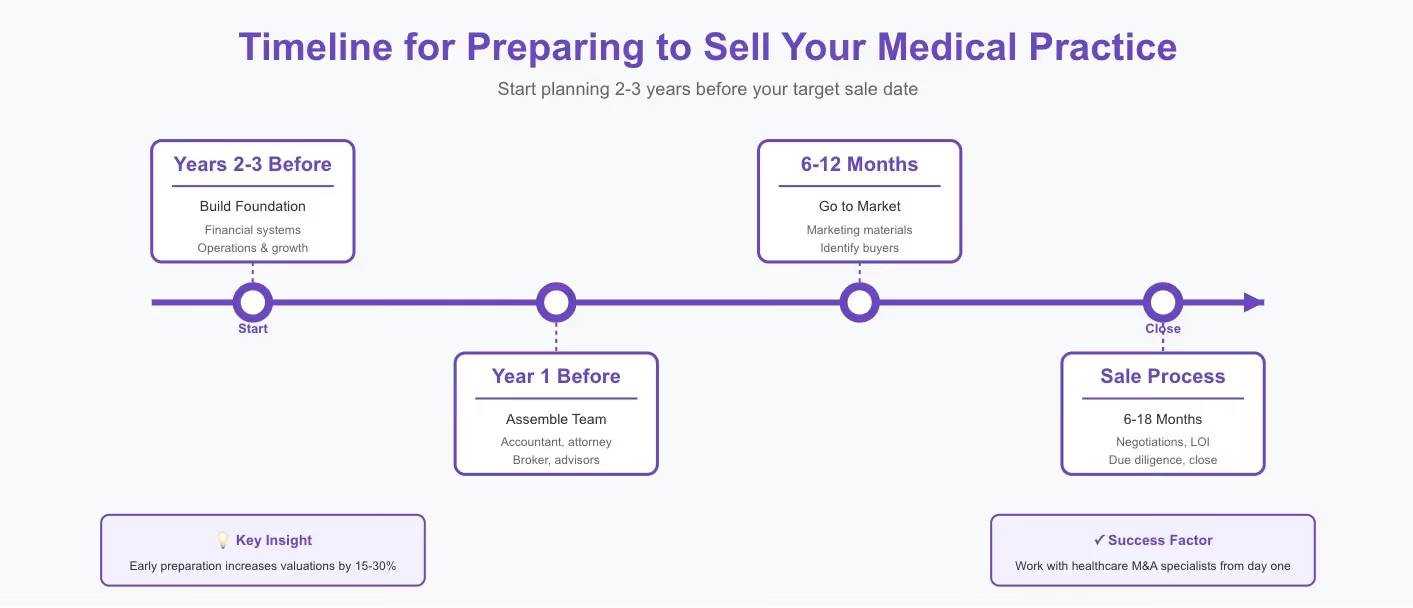
Years 2-3 Before Sale: Build the Foundation
Get your financials in order
- Work with a healthcare-specialized accounting firm (like Flychain) to ensure clean, accurate books
- Implement accrual-based accounting if you're currently on cash basis. Read our article to understand the difference between cash vs. accrual accounting and what it actually means for your practice.
- Create clear P&L statements, balance sheets, and cash flow statements
- Document all revenue streams and expense categories
- Begin tracking key metrics: patient volume, payer mix, revenue per provider, EBITDA margins
Optimize operations
- Document all standard operating procedures
- Cross-train staff to reduce key-person dependencies
- Implement practice management and EHR systems that provide robust reporting
- Address any compliance issues or outstanding liabilities
Grow strategically
- Focus on profitable revenue growth, not just top-line expansion
- Improve your payer mix by reducing dependence on low-reimbursement payers
- Build recurring revenue streams when possible
- Strengthen referral relationships and document referral sources
Year 1 Before Sale: Assemble Your Advisory Team
Selling a medical practice requires specialized expertise. Assemble your team early:
Essential advisors:
- Healthcare-specialized accountant: Ensures financials are buyer-ready and helps with quality of earnings analysis
- M&A attorney: Focuses specifically on healthcare transactions (not your general business attorney)
- Business broker or investment banker: Helps identify buyers and manage the process (typically for practices valued at $2M+)
- Financial advisor: Helps structure the sale for optimal tax treatment
- Practice management consultant: Can help improve operations and valuation before going to market
Important: Not all professionals are created equal. You need advisors who specialize in healthcare transactions and speak the same language as sophisticated buyers. A general business attorney or accountant without healthcare M&A experience can cost you significantly in valuation and deal structure.
6-12 Months Before Sale: Go to Market
Prepare marketing materials
- Confidential Information Memorandum (CIM) detailing practice history, financials, and growth opportunities
- Executive summary for initial buyer outreach
- Data room with organized due diligence materials
Identify potential buyers
- Research strategic buyers in your market
- Connect with private equity groups active in your specialty
- Consider working with search fund entrepreneurs
- Evaluate cultural fit and strategic alignment
Begin conversations
- Initial calls to gauge interest and alignment
- Non-disclosure agreements (NDAs) before sharing sensitive information
- Preliminary valuation discussions
- Letters of Intent (LOI) from serious buyers
The Sale Process: What to Expect When Selling a Medical Practice
Understanding the typical transaction timeline helps manage expectations and avoid surprises.
Phase 1: Initial Conversations (Weeks 1-8)
- Introductory calls to explore mutual fit
- High-level financial overview (3-5 years of summary data)
- Discussion of your priorities, transition preferences, and timeline
- Buyer shares their vision for growth and integration
Red flags: Buyers who won't clearly articulate their growth plan, seem evasive about employee retention, or push for quick decisions without building relationship trust.
Phase 2: Letter of Intent (Weeks 8-12)
- Buyer submits non-binding LOI outlining proposed purchase price, deal structure, and key terms
- Negotiation of LOI terms: valuation, earn-outs, equity rollover, employment agreement, transition support
- Exclusivity period (typically 60-90 days) where you agree not to shop the deal
Critical terms to negotiate:
- Purchase price and payment structure: Cash at close vs. earn-outs vs. seller financing
- Equity rollover: Will you retain ownership stake for future upside?
- Employment agreement: Compensation, duration, responsibilities, and termination terms
- Non-compete provisions: Geographic scope and duration
- Key employee retention: Agreements to keep critical team members
Phase 3: Due Diligence (Weeks 12-20)
Buyers conduct comprehensive review of your practice:
Financial due diligence:
- 3-5 years of detailed financial statements
- Quality of Earnings (QoE) analysis by buyer's accountant
- Verification of revenue, EBITDA, and working capital
- Analysis of one-time expenses and owner add-backs
Operational due diligence:
- Payer contracts and reimbursement rate verification
- Patient records review and retention analysis
- Credentialing and licensing verification
- Real estate lease terms (if applicable)
- Equipment inventory and condition assessment
Legal due diligence:
- Review of all contracts (payer, vendor, employment, real estate)
- Compliance with healthcare regulations (HIPAA, Stark Law, Anti-Kickback)
- Outstanding litigation or liability claims
- Professional liability insurance history
Clinical due diligence:
- Quality metrics and patient satisfaction scores
- Provider credentials and standing
- Clinical protocols and standards of care
Common deal-killers during due diligence:
- Undisclosed liabilities or compliance issues
- Material decline in revenue or patient volume
- Loss of key payer contracts
- Significant discrepancies between presented financials and actual records
- Discovery that the practice is overly dependent on the selling physician
Pro tip: Anticipate due diligence requests and prepare materials in advance. Quick, transparent responses build trust and keep momentum. Slow or evasive responses trigger buyer concerns and can kill deals.
Phase 4: Final Negotiations and Closing (Weeks 20-26)
- Finalize purchase agreement based on due diligence findings
- Negotiate any purchase price adjustments
- Sign definitive agreements
- Close transaction and transfer ownership
Key Legal Considerations When Selling a Medical Practice
While this isn't legal advice (consult with a qualified healthcare M&A attorney), here are typical legal elements in medical practice sales:
For Physician-Owners Still Practicing
Employment Agreement (2-5 years typical)
- Compensation structure: Base salary, productivity bonuses, benefits
- Clinical responsibilities and patient load expectations
- Administrative duties and time commitments
- Clinical oversight and decision-making authority
- Termination provisions: for cause, without cause, resignation
- Restrictive covenants (see below)
Critical negotiation points:
- Maintain as much clinical autonomy as possible
- Ensure compensation is fair and motivating (remember, you'll have less incentive after receiving sale proceeds)
- Clarify what happens if the buyer's plans change or the practice struggles
- Include protections against unreasonable workload increases
For Non-Practicing Owners
Transition/Advisory Agreement (6-12 months typical)
- Part-time advisory role with decreasing time commitment
- Knowledge transfer and relationship introductions
- Availability for questions during transition period
- Compensation for transition services
This arrangement works well with search fund buyers who need to learn the business but gives you flexibility to exit gradually.
Restrictive Covenants
Non-Compete Agreement
- Prevents you from practicing in the same specialty within a defined geographic area for a specified period (typically 2-5 years)
- Enforceable in most states for reasonable scope and duration
- Critical protection for buyer's investment
Non-Solicitation Agreement
- Prevents you from recruiting employees or patients to a competing practice
- Typically mirrors non-compete duration
Confidentiality/Non-Disclosure Agreement
- Protects proprietary business information post-sale
- Usually permanent
Key Employee Retention
Buyers often require employment agreements with critical team members:
- Top management: 1-2 year agreements common
- Key clinical staff: 1 year agreements if critical to operations
- Compensation: May include raises or retention bonuses to ensure stability
- Equity incentives: Some buyers offer equity to key employees for long-term alignment
Important: Strong buyers, particularly search funds, view your team as essential to success. They should be eager to retain and invest in your people, not looking to "clean house."
Red Flags: Deal-Killers to Avoid
Based on real healthcare mergers and acquisitions experience, here are common reasons deals fail:
Seller-Side Red Flags
1. Unclear motivations
- Saying you want to retire but actually wanting to stay involved and control decisions
- Looking to sell because the business is declining (buyers will discover this)
- Mixed signals about timeline and commitment
2. Poor financial transparency
- Incomplete or disorganized financial records
- Reluctance to share detailed information during due diligence
- Discrepancies between tax returns and internal financials
- Inability to explain revenue declines or expense increases
3. Unrealistic valuation expectations
- Basing expectations on outlier transactions, not comparable sales
- Ignoring practice-specific challenges that reduce value
- Refusing to acknowledge industry headwinds or risks
4. Key person dependency
- Practice revenue entirely dependent on selling physician with no associate development
- No documented systems or processes (everything in the owner's head)
- High risk of patient attrition upon owner departure
Buyer-Side Red Flags
1. Lack of clear vision
- Can't articulate specific growth plan for your practice
- Vague or evasive about post-acquisition strategy
- No track record of successful practice integrations
2. Poor cultural fit
- Dismissive of your legacy or employee concerns
- Focused solely on cost-cutting vs. growth
- Unwilling to maintain clinical quality standards
- High-pressure tactics or unreasonable timeline demands
3. Insufficient communication
- Slow to respond during due diligence
- Reluctant to introduce you to their team or investors
- Won't provide references from previous acquisitions
4. Concerning track record
- History of practice failures or legal disputes
- Poor reputation in the healthcare community
- High turnover in acquired practices
Building Trust: The Foundation of Successful Medical Business Sales
The most successful transactions happen when buyer and seller build genuine trust and alignment. This isn't just a financial transaction… it's a transfer of your life's work, your patients' care, and your team's livelihoods.

Questions Sellers Should Ask Buyers
About their vision:
- What specifically attracted you to my practice?
- What's your 3-5 year growth plan for the practice?
- How will you differentiate us from competitors?
- What investments will you make in the business?
About people:
- What's your approach to employee retention?
- Can you share examples of how you've handled teams in previous acquisitions?
- What happens to employees who aren't a fit?
- How will you maintain relationships with key referral sources?
About clinical quality:
- Who will have clinical oversight after I transition?
- How do you ensure clinical excellence while growing?
- What quality metrics do you track?
- How do you handle physician-leadership conflicts?
About legacy:
- Will the practice name and brand be retained?
- How will my patients be informed of the transition?
- What role will I play in communicating changes?
Get references: Ask to speak with sellers from previous acquisitions. A confident buyer will readily provide contacts.
Questions Buyers Should Ask Sellers
About motivations:
- Why are you selling now?
- What are your priorities in choosing a buyer?
- What do you want your legacy to be?
- What concerns do you have about selling?
About the business:
- What keeps you up at night about the practice?
- What opportunities do you see but haven't pursued?
- If you were staying, what would you change?
- What makes your best employees stay?
About transition:
- What's your ideal post-sale involvement?
- How will your patients react to the sale?
- Which employees are critical to success?
- What relationships need careful management?
The dating process matters: Both sides should invest time in multiple conversations before committing to exclusivity. Deals that rush through initial phases often fail during due diligence or post-closing integration.
Maximizing Your Medical Practice Valuation: Final Tips
If you're preparing to sell within the next 2-3 years, focus on these high-impact areas:
1. Clean up your financials
- Move to accrual accounting
- Document all revenue streams clearly
- Reduce personal expenses running through the business
- Maintain consistent, accurate record-keeping
2. Reduce concentration risks
- Diversify payer mix (reduce dependence on any single payer)
- Develop associate providers to reduce owner dependency
- Broaden referral sources
- Minimize revenue from any single service line or patient
3. Document everything
- Standard operating procedures for all key processes
- Payer contracts and reimbursement rates
- Patient retention and satisfaction metrics
- Employee roles, responsibilities, and compensation
- Referral source relationships and histories
4. Invest in growth
- Don't starve the business of investment in final years
- Consider adding complementary services
- Upgrade technology and systems that improve efficiency
- Focus on patient experience improvements
5. Build a strong team
- Hire and develop capable managers who can run operations without you
- Cross-train staff to eliminate single points of failure
- Create a positive culture that will survive ownership transition
- Address any problematic employees before going to market
6. Understand your market
- Research recent comparable sales in your specialty and region
- Understand which buyer types are most active in your area
- Get preliminary valuations from business brokers or investment bankers
- Set realistic expectations based on data, not hopes
Conclusion: Your Roadmap for Selling a Medical Practice
Selling a medical practice is a complex, emotional journey that requires careful planning, expert guidance, and strategic thinking. Whether you're exploring medical practice valuation today or planning to sell in the coming years, the key is to start early, surround yourself with specialized advisors, and maintain clear priorities throughout the process.
Remember these core principles:
- Start preparing 2-3 years before your target sale date
- Not all buyers are created equal. Find the right strategic partner for your priorities
- Financial and operational excellence dramatically improves valuation
- Trust and transparency are essential to successful healthcare mergers and acquisitions
- Your legacy, employees, and patients deserve thoughtful transition planning
The medical business sales landscape is evolving rapidly, with increased private equity activity, changing reimbursement models, and shifting healthcare dynamics. But practices that are well-prepared, financially sound, and operationally excellent will always attract quality buyers and command strong valuations.
Ready to Start Your Journey?
At Flychain, we specialize in helping medical practices optimize their financial operations and prepare for successful exits. Our healthcare-focused accounting and financial analytics platform gives you the clean, organized financial data that buyers demand and that maximizes your practice valuation.
Whether you're exploring options today or planning for a sale in several years, we're here to help you build a thriving, valuable practice that positions you for the exit you deserve.
Want buyers to trust your numbers? The practices that command the highest valuations have one thing in common: financials that hold up under scrutiny.
Flychain gives independent healthcare practices audit-ready books, real-time P&L visibility, and the EBITDA clarity that serious buyers demand.Get a free financial assessment →
About the Author: This guide is based on insights from Ethan Schwarzbach, co-founder of Flychain, and Justin Outslay, founder of Cinnamon Hill Partners, a search fund focused on acquiring healthcare practices. Their conversation explored the realities of medical practice sales from both buyer and seller perspectives. Listen to the full podcast episode on Spotify here.
Frequently Asked Questions About Selling a Medical Practice
How long does it take to sell a medical practice? From initial conversations to closing, expect 6-12 months on average. However, preparation should begin 2-3 years before going to market to optimize valuation.
What is the average medical practice valuation multiple? Most practices sell for 3-6x EBITDA, though specialty, profitability, growth trajectory, and market conditions significantly impact multiples. Dermatology, ophthalmology, and GI practices often command premium valuations.
Should I use a broker when selling my practice? For practices valued over $2 million, a healthcare-specialized business broker or investment banker can help identify qualified buyers, manage the process, and potentially increase your valuation. For smaller practices, a strong M&A attorney and accountant may be sufficient.
What happens to my employees when I sell? This depends heavily on the buyer type. Search funds typically retain and invest in teams. Strategic buyers may eliminate redundancies. Private equity varies but often reduces headcount as part of margin expansion strategies. Negotiate employee protections during deal structuring.
Can I keep some ownership after selling? Yes, equity rollover is common, especially with private equity buyers. This allows you to participate in future value creation while taking some chips off the table today. Typical rollover ranges from 10-30% of equity.
How is a medical practice valued? Common methods include: (1) EBITDA multiples (most common), (2) Revenue multiples, (3) Discounted cash flow analysis, and (4) Comparable sales. Buyers typically use multiple methods to triangulate valuation.
What's the difference between an asset sale and a stock sale? Most medical practices sell as asset sales, where the buyer purchases specific assets and assumes certain liabilities. This is preferred by buyers for tax and liability reasons. Stock sales (purchasing the entity) are less common but occur in some corporate structures.
Do I need to stay after selling my practice? If you're a practicing physician generating significant revenue, expect to stay 2-5 years with an employment agreement. Non-practicing owners typically transition over 6-12 months. Terms are negotiable based on your role and importance to operations.
What if my revenue is declining? Address declines before going to market. Buyers will heavily discount declining practices or walk away entirely. Focus on stabilizing and returning to growth before selling, or expect a significantly reduced valuation.
How do I find potential buyers for my practice? Options include: (1) Healthcare business brokers/investment bankers, (2) Direct outreach to strategic buyers in your market, (3) Private equity firms active in your specialty, (4) Search fund databases and networks, (5) Industry conferences and networking events.