Many healthcare owners start out thinking accounting is accounting. A number goes in. A number comes out. As long as the books balance, everything must be fine.
Then reality sets in.
Payer reimbursements arrive weeks - or months - after care is delivered. Payments don’t match what was billed. Adjustments appear without explanation. Payroll feels heavy even when schedules are full. And somehow, the bank balance never tells the full story.
Healthcare finances behave very differently from most other businesses. And that’s where many practices begin to feel stuck.
The good news is this: the right healthcare-specific accounting approach can bring clarity back into focus. It can reduce surprises, smooth cash flow, and help you actually understand how your practice is performing.
In this article, we’ll break down:
- What makes healthcare accounting services unique
- The limitations of general accounting services for medical practices
- What medical accountants do differently from general CPAs
- Why accounting for healthcare industries require specialized workflows
- What to look for in the right accounting partner
- Why tools like QuickBooks fall short on their own
Finally, this article helps you understand what to look for in an accounting partner that’s built for these complexities and why specialized healthcare accounting is essential for clarity and growth.
What Do Healthcare Accounting Services Include?
Healthcare accounting services go far beyond basic bookkeeping. They are designed specifically for how medical practices earn, collect, and spend money.
Here’s what that typically includes.
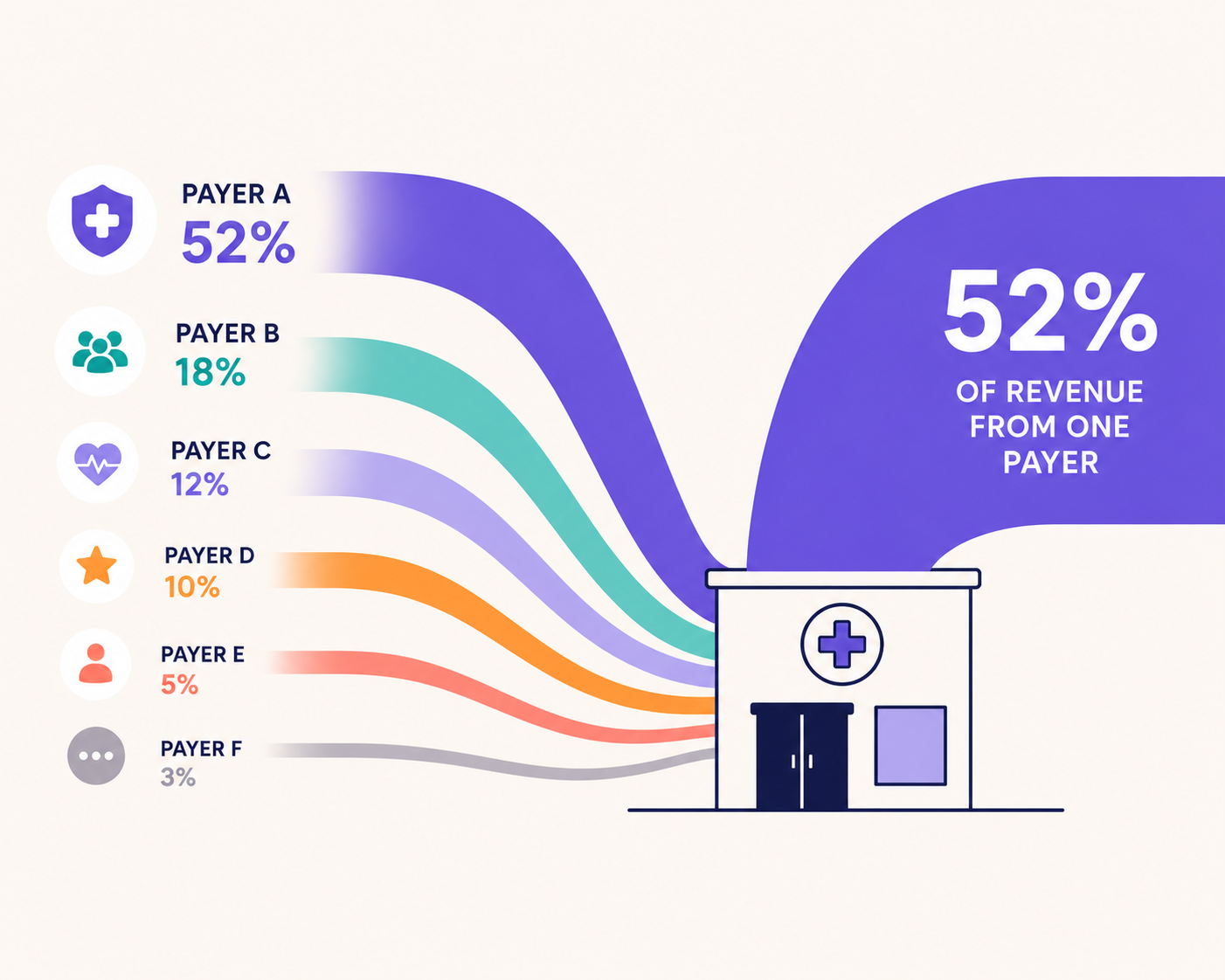
First, revenue is categorized by payer. Not just total revenue, but revenue by insurance company, Medicaid program, or private pay source. This makes it possible to understand which payers are profitable and which ones are quietly squeezing margins.
Next comes profitability tracking. Healthcare accounting services look at profitability by service line and often by location. This helps owners see where growth is actually coming from, and where costs may be outpacing revenue.
Monthly payer revenue trends are also tracked. This matters because healthcare revenue is rarely stable month to month. Seeing trends early helps practices prepare for cash flow dips before they happen.
Payroll is another major differentiator. In medical accounting, clinical payroll is typically treated as cost of goods sold (COGS), while administrative payroll is classified as an operating expense. This split is critical for understanding true gross margin.
Healthcare accounting services also provide monthly financial statements with healthcare-specific insights. Not just a profit and loss statement, but explanations that tie numbers back to operations.
Finally, there’s integrated tax readiness. Healthcare businesses have deductions and tax considerations that don’t apply to most industries. Clean, healthcare-aligned books ensure those opportunities aren’t missed.
This is the foundation of strong healthcare accounting services.

What Do General Accounting Services Typically Cover?
General accounting services focus on the basics. And for many industries, that’s enough.
Typically, general accounting includes:
- Standard bookkeeping
- Bank and credit card reconciliations
- Tax filing
- Basic financial statements
These services ensure transactions are recorded correctly and reports are produced.
What they don’t do is interpret healthcare-specific data.
General accounting doesn’t analyze payer behavior. It doesn’t track reimbursement timing. It doesn’t break out clinical versus administrative payroll. And it doesn’t connect financial results back to how care is delivered.
For retail or professional services businesses, that’s usually fine. For healthcare practices, it often leaves owners with reports that look accurate, but don’t explain much.
Why Accounting for the Healthcare Industry Is More Complex
Accounting in healthcare is more complicated than most owners expect. Even the best general accounting software can’t keep up with the realities of payer reimbursements and clinical operations.
Several factors make accounting for the healthcare industry uniquely complex.
Reimbursements are delayed. Revenue is earned when care is delivered, but cash arrives later. Sometimes much later. This creates gaps between performance and cash flow.
Payer mix adds another layer. A practice might work with multiple commercial insurers, Medicaid programs, and private-pay patients. Each payer behaves differently.
Revenue is tied to CPT and HCPCS codes. Payments depend on authorization rules, contracted rates, and documentation accuracy.
Adjustments and write-offs are common. What you bill is rarely what you collect.
Many practices operate across multiple locations or entities. Each location may have different staffing models and payer mixes.
Payroll cycles are also unique. Clinical staff scheduling drives revenue, but payroll must be paid on time regardless of reimbursement delays.
All of this means generic accounting approaches miss critical context. Without specialized workflows, financial reports can look fine while hiding real issues.

What Medical Accounting Professionals Do Differently
Medical accounting is not just accounting with a healthcare label. It’s a different way of thinking.
Medical accountants understand how healthcare revenue behaves. They don’t just record numbers. They interpret them.
They focus heavily on KPI interpretation. Metrics like operating margin by location, revenue per clinician, and collections by payer matter more than generic profit percentages.
They understand payer mix and reimbursement dynamics. This helps identify when margin pressure is coming from rates, staffing, or volume shifts.
Medical accountants also split payroll correctly. Clinical payroll is treated as COGS. Administrative payroll stays in operating expenses. This allows gross margin to reflect operational reality.
Profitability is analyzed by service line, not just at the practice level. This helps owners see what’s truly driving results.
Tax planning is tailored to healthcare structures. Independent practices often have unique entity setups and deduction opportunities that require proactive planning.
Medical accountants also support multi-entity analysis. They help owners understand performance across locations without immediately jumping into complex reporting structures.
Most importantly, they act as strategic partners. They help answer real questions. Can we hire another clinician? Can we expand hours? Can we open a new location?
This level of insight is what separates medical accounting from general accounting.
Healthcare Accounting Services vs. General Accounting (Side-by-Side)
The difference becomes clearer when you look at outputs.
General accounting focuses on accuracy. Healthcare accounting focuses on accuracy and insight.
Healthcare accounting services provide payer-level reports and dashboards. General accounting typically does not.
They support budgeting tied to staffing, scheduling, and growth plans. General accounting often stops at historical reporting.
Multi-entity reporting is handled with healthcare context in mind. General accounting may struggle as complexity grows.
Payroll complexity is expected and managed. Clinical and administrative payroll are treated differently by design.
Industry benchmarking is another major difference. Healthcare accounting services can compare margins and expenses against similar providers. General accounting usually can’t.
These differences directly affect decision-making.
Why QuickBooks Falls Short for Accounting in the Healthcare Industry
QuickBooks is a powerful general accounting tool. But it was not built for healthcare.
Accounting in healthcare is layered and specialized. Generic tools simply don’t capture the full picture.
QuickBooks can’t track revenue or insights at the payer level without heavy customization. It lacks industry benchmarking for healthcare rates, margins, and expenses.
Visibility across multi-location or multi-entity practices is extremely challenging. Reports become fragmented as complexity increases.
QuickBooks can’t easily break down margins by service line, CPT code, or location. That information lives outside the system.
It also isn’t designed to handle the accrual workflows many healthcare providers rely on. Matching revenue to dates of service requires workarounds.
Integration is another challenge. QuickBooks can’t pull operational data from EMRs or RCM systems in a meaningful way.
This is where healthcare-specific platforms like Flychain come in.

How to Choose the Right Medical Accounting Partner
Choosing the right partner matters.
Here’s what to look for.
Start with healthcare experience. Not just a few clients, but deep familiarity with medical accounting.
Look for clear, healthcare-specific financial reporting. Reports should make sense to you, not just your accountant.
Monthly touchpoints matter. You should review financials regularly, not just at year-end.
Expense cleanup should be proactive. Unclear expenses should be resolved monthly, not months later during tax season.
Communication should be fast and transparent. Questions shouldn’t sit unanswered.
Your partner should understand accrual workflows and how they apply to healthcare revenue.
Integration with EMR, RCM, bank accounts, and payroll systems is key. Financial data shouldn’t live in isolation.
Multi-entity and multi-location expertise matters as practices grow.
Tax planning should be proactive, not reactive. Filing is not the same as strategy.
Dashboards should be intuitive, with clear explanations.
Access to industry benchmarks is a major plus. Knowing how your margins compare to peers provides context.
Finally, adherence to HIPAA standards ensures sensitive data is handled appropriately.
Accuracy is only half the value. Insight is what drives better decisions.
To compare your options in detail, see our article Best Accounting Software for Healthcare Organizations.
Why Accounting for the Healthcare Industry Matters for Growth
Strong accounting supports growth in real ways.
Cash flow becomes smoother. Surprises become less common.
Margins become more predictable. You know what’s working and what isn’t.
Staffing decisions improve. Hiring feels informed, not risky.
Expansion becomes more realistic. You can evaluate new locations with confidence.
Payer negotiations improve. Data strengthens your position.
Accounting for the healthcare industry isn’t just about compliance. It’s about control.
Conclusion
Healthcare practices deserve financial clarity built for how they operate.
General accounting services often fall short because healthcare is different. Revenue timing, payer behavior, staffing models, and growth paths all require specialized attention.
Healthcare accounting services reduce stress. They provide visibility. And they support smarter, more confident decisions.
You shouldn’t have to navigate payer complexity alone.
If you’re ready to bring clarity to your finances, you can:
- Book a Flychain demo to see healthcare accounting in action
- Explore Flychain’s bookkeeping and accounting services
- Read another Flychain resource to continue learning
You don’t have to run your practice’s finances in the dark.
Healthcare vs. General Accounting: Common Questions
Is QuickBooks good enough for healthcare accounting?
QuickBooks is a solid accounting foundation, but it’s largely self-serve. You still need a bookkeeper to maintain your books, and often that bookkeeper isn’t healthcare-specific. On its own, QuickBooks also struggles with accrual-based workflows, breaking down clinical versus administrative payroll, and multi-entity or multi-location reporting. Healthcare accounting services add the healthcare expertise and structured workflows, turning raw data into clear, reliable financial insight.
Why can’t I just use a general CPA for my medical practice?
General CPAs are excellent at tax filing, but many don’t specialize in medical accounting. Healthcare practices operate with delayed reimbursements, complex payer mixes, and clinical payroll structures that require industry-specific workflows. Without that specialization, financial reports may be accurate, but not very useful for running the business day to day.
How do healthcare-specific workflows improve profitability?
Healthcare-specific workflows organize financial data in a way that reflects how care is delivered. This includes visibility into margins by service line or location, proper treatment of clinical payroll, and clearer views of operating performance. With better structure and context, practice owners can spot inefficiencies earlier and make more confident staffing and growth decisions.
What is the main difference between general accounting and healthcare accounting services?
The main difference is how financial data is structured and interpreted. General accounting focuses on recording transactions correctly. Healthcare accounting services are built around the realities of the healthcare industry: payer mix, reimbursement timing, payroll breakdown, and multi-location operations. Instead of one-size-fits-all reports, healthcare accounting provides context and clarity that help owners understand margins, cash flow timing, and performance across the practice.
When should a healthcare practice consider upgrading its accounting approach?
Many practices consider upgrading when they feel like they’re flying blind financially. If decisions are being made without confidence in the numbers, or if growth has outpaced what your current accounting or bookkeeping setup can support, it’s often a sign that general accounting is no longer enough. Cash flow surprises, unclear margins, or reports that lag weeks behind reality are all signals that your practice may need a more healthcare-specific accounting approach.
Are there accounting firms that only work with healthcare providers instead of general small businesses?
Yes. Healthcare-only accounting firms like Flychain work exclusively with medical practices, which means their workflows, benchmarks, and software are all built around how healthcare businesses earn, collect, and spend money.
This specialization produces financial reports that go beyond basic accuracy to give practice owners real insight into payer performance, staffing costs, and growth decisions. This is context that a generalist firm serving multiple industries simply can't replicate.
What are the essential accounting practices every doctor or healthcare practice should have in place?
Every healthcare practice should have accurate monthly bookkeeping with a guaranteed close, payer-level revenue categorization, separation of clinical and administrative payroll, a current cash flow statement, and proactive quarterly tax planning.
Practices planning to grow or seek financing should also have accrual-based books, multi-location consolidated reporting, and financial benchmarks that compare performance to industry peers in their specialty.