If you’re a healthcare practice owner, and you’re staring down the barrel of months of unreconciled transactions, stacked receipts, and a bookkeeping backlog that just keeps growing, you’re not alone. The start of a new season is the perfect time to tackle catch up bookkeeping and give your financial records the deep clean they deserve.
Your practice’s finances are no different — they too require periodic attention, much like the relief you feel after a thorough spring cleaning of your home.
In this ultimate guide, we’ll teach you everything you need to know about catch up bookkeeping services – from understanding why backlogs happen, to creating a step-by-step plan to get your books up to date. You’ll learn how to find your weak points, pick the right tools and services, and build good habits that keep your finances clean all year long.
We will go over the warning signs of a bookkeeping backlog, the true cost of neglecting your books, a checklist for catch up bookkeeping, how Flychain can help you automate the process, and expert tips for staying on top of your finances moving forwards.
Whether you take care of bookkeeping yourself or get support from a professional, this guide is intended to help you take control of the financial health of your practice.
>>> Looking to clear your books fast? See how Flychain accounting can clear your backlog in days, not months. Schedule your free consultation today.
What Is Catch Up Bookkeeping and Why Does It Matter?
Catch up bookkeeping is the process of bringing your books up to date to account for all transactions that have happened during a time of neglect or backlog. If you're behind by a few days, weeks or even months, you need to reconcile every bank statement, categorise every expense, and make sure your books accurately reflect the financial position of your medical practice.
For healthcare providers, keeping accurate and up-to-date bookkeeping records is not just good practice, it is essential. Your books are integral to tax filings, loan applications, financial planning, and compliance reporting. Outdated records are a disadvantage to every downstream decision.
Why Bookkeeping Backlogs Happen
Backlogs rarely happen overnight. These are the result of small delays adding up over time. Common culprits include being too busy seeing patients, staff turnover in administrative roles, switching accounting software before finishing the migration, growing pains as the practice scales and general confusion about what needs to be tracked.
According to the 2024 Intuit QuickBooks Business Solutions Survey, businesses spend an average of 25 hours every week on manual data entry and reconciling financial data, while 85% say these manual processes negatively impact profitability and growth.

The Real Cost of Falling Behind
Ignoring your books is more than a messy spreadsheet. A backlog in bookkeeping can have financial consequences such as missing out on tax deductions that could save your practice thousands of dollars; penalties for late payments to vendors and the IRS; inaccurate financial reports leading to poor business decisions; difficulties in securing financing or lines of credit; and countless hours spent reconstructing and reconciling financial records.
And the financial effect doesn’t end there. The National Society of Accountants’ Income & Fees Survey revealed that 75.1% of tax professionals charge higher fees if clients provide disorganised or incomplete financial records. For healthcare practices with more complex accounting needs, months of neglecting bookkeeping can add significantly to accounting and tax preparation costs.
7 Warning Signs You Need a Bookkeeping Clean Up
Not sure whether your books need a bookkeeping clean up? Here are seven clear indicators that it is time to act. And if you are also searching for the right financial partner to help, check out our guide to finding the right accountant for your medical practice.
1. You Cannot Produce a Current Profit and Loss Statement
If your most recent P&L statement is more than 30 days old, your books are behind. A current profit and loss statement is the foundation of financial decision-making for any practice.
2. Bank Reconciliations Are Months Overdue
You should check your bank account at least once a month. If you have a backlog of statements that have not been reconciled, your records are likely riddled with errors and discrepancies.
3. You Have Uncategorized Transactions
A growing list of uncategorized transactions in your accounting software is a red flag. Every transaction needs a proper category for your financial reports to mean anything.
4. Vendor Payments Are Frequently Late
If you don’t watch your payables closely, late payments become the norm. This harms vendor relationships and often incurs penalty fees.
5. Tax Season Fills You with Dread
If you panic when you gather your tax documents, it’s time for an accounting clean up. Tax prep made easy and hassle free with well organised books.
6. You Are Mixing Personal and Business Expenses
Commingling funds is one of the fastest ways to create a bookkeeping mess. If personal and business expenses are tangled together, separating them is a critical first step in your clean up bookkeeping process.
7. Your Accounts Receivable Is a Mystery
For healthcare practices dealing with insurance claims and patient payments, losing track of accounts receivable means leaving money on the table. If you do not know who owes you what, your books need immediate attention.

The Complete Spring Cleaning Checklist for Catch Up Bookkeeping
Think of this as your financial spring cleaning roadmap. Whether your backlog is a few weeks or an entire year, this step-by-step checklist will help you get back on track with clean, accurate books.
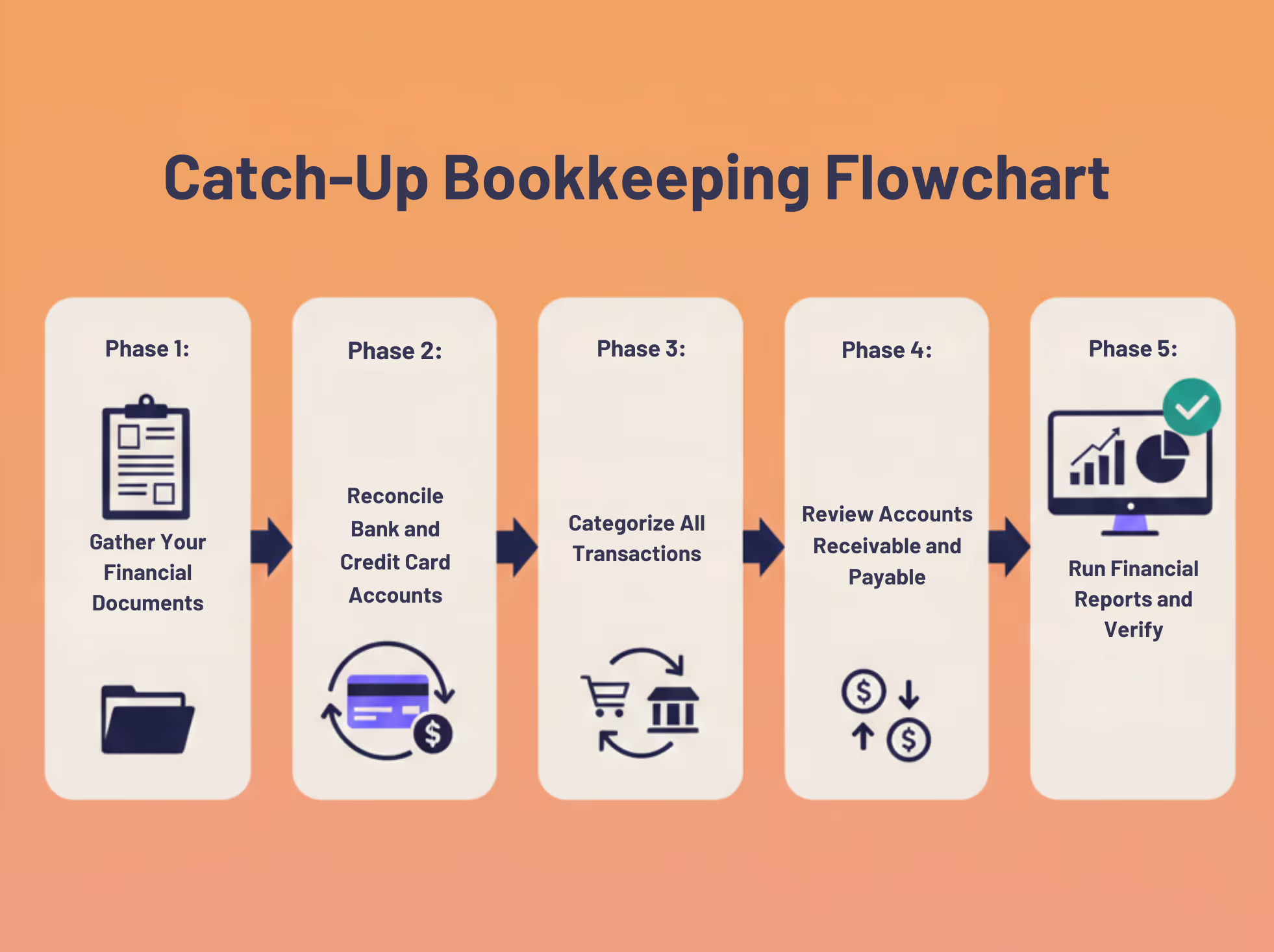
Phase 1: Gather Your Financial Documents
You’ll want to collect all relevant records before you begin the reconciliation process. These include bank statements for the relevant months, credit card statements, receipts for major purchases and expenses, invoices sent and received, payroll records, insurance explanation of benefits and remittance advice, and loan or financing documents.
Pro tip: Set up a shared digital folder structure, organised by month. This will speed up the process greatly and create a system to move forward.
Phase 2: Reconcile Bank and Credit Card Accounts
Start with the oldest month you have not reconciled and move forward. Each month, reconcile each transaction in your accounting software against the corresponding bank statement. Find all the differences and fix them before you go on.
This is often the most time-consuming part of catch up bookkeeping, but it is also the most critical. Unreconciled accounts are the number one source of financial reporting errors in small practices.
Phase 3: Categorize All Transactions
Now that your accounts are reconciled, go through the transactions that aren’t categorised, and assign each one to the correct account. Before you start categorising, make sure you understand whether your practice uses cash or accrual accounting, because this dictates when revenue and expenses are recognised. Not sure which method is best for you? Read our cash vs. accrual accounting comparison and what matters for your practice.
Use a consistent chart of accounts that makes sense for your practice type. Common categories for medical practices that should be used include medical supplies, equipment & maintenance, staff salaries & benefits, rent & utilities, insurance premiums, marketing & advertising, and continuing education.
Phase 4: Review Accounts Receivable and Payable
Take a look at your accounts receivable ageing report. Follow up on any past due invoices or insurance claims that are outstanding. On the payable side, be sure that you have all vendor bills entered, and that you are not carrying any liabilities that you don’t know about.
Phase 5: Run Financial Reports and Verify
After your books have been updated, run a full set of financial reports. This is your income statement, your balance sheet and your cash flow statement. Check them for accuracy and preciseness. Do the numbers add up? Are your bank deposits equal to your revenue? Are your total expenses correct?
>>> Overwhelmed by your bookkeeping backlog? Flychain can handle your catch up bookkeeping. Schedule your free assessment and see how much time you can save.
How Flychain Simplifies Catch Up Bookkeeping for Healthcare Practices
When you run a busy medical practice, doing the catch-up bookkeeping yourself can be time-consuming and prone to errors. That’s where Flychain comes in. Flychain is built for healthcare providers from the ground up. We pair automated bookkeeping technology with bookkeepers who specialise in healthcare along with expert financial support to get your books up to date and keep them there.
Automated Transaction Categorization
Flychain's platform has intelligent automation to classify transactions to your practice's needs. But, instead of spending hours manually sorting through hundreds of line items, the system learns your patterns and does the categorisation for you automatically, saving a considerable amount of time when cleaning up an accounting mess.
Healthcare-Specific Chart of Accounts
Unlike general accounting tools, Flychain uses a chart of accounts designed specifically for healthcare practices. What's that mean? Your financial statements will be customised to include the specific revenue streams and expense line items of your industry from day one.
Dedicated Financial Experts
Flychain connects you with financial professionals who understand healthcare. They don’t just clean up your books; they find ways to save money, point out possible compliance issues and deliver practical insights to boost your practice’s financial health.
Financial Dashboard
Once you have completed your catch-up bookkeeping, Flychain provides a financial dashboard that gives you instant visibility into the performance of your practice. No more wondering about your financial standing.
Catch Up Bookkeeping Options Compared: DIY vs. Bookkeeper vs. Flychain
When it comes to tackling a bookkeeping backlog, you have several options. Below is a table about how they compare across the factors that matter most to practice owners.
While DIY bookkeeping works for very small backlogs, most practice owners find that the time investment is simply not worth it. Freelance bookkeepers can be effective, but they may lack healthcare-specific expertise and their availability can be inconsistent. Flychain offers you the best of both worlds: smart automation combined with dedicated healthcare financial experts, all at a predictable monthly price.
Catch-up bookkeeping is about restoring clarity. But once your books are clean and up to date, the more important question becomes: who’s going to keep them that way? Choosing the right financial partner is just as critical as cleaning up the past. In fact, for many practice owners, finding the right accountant for medical professionals is a lot like finding your life partner: it’s about trust, alignment, and long-term growth.
Popular Catch Up Bookkeeping Services and Tools
If you are exploring your options for catch up bookkeeping services, here is a look at some of the most common tools and services on the market and how they stack up.
QuickBooks Online
Small businesses like QuickBooks, the most popular accounting software. It has bank feeds and simple reconciliation tools but you still have a lot of manual work to catch up a backlog. It is a general purpose tool and not optimised for healthcare workflows.
Xero
Xero has a nice clean look and solid bank reconciliation capabilities. However, it does not have healthcare-specific categorisation or support, much like QuickBooks, so you still need to know what you’re doing to clean up bookkeeping for a medical practice.
FreshBooks
FreshBooks is popular among solo practitioners for invoicing and basic bookkeeping. For significant backlogs or complex revenue cycles involving insurance, it can be limiting.
Bench (now part of Employer.com)
Bench offered dedicated bookkeeping services with a technology-first approach. Bench provided dedicated bookkeeping services with a tech-first approach. Since the acquisition, the future and service model of the platform has evolved. Practices that used Bench for backlog bookkeeping may wish to explore alternatives.
Pilot
Pilot provides bookkeeping services to startups and fast-growing businesses. It's comprehensive but not tailored to healthcare practices with their unique financial complexities.
Decimal
Decimal provides technology-enabled bookkeeping services. It does clean up projects but is general business and not the specialised needs of a medical practice.
Flychain
Unlike those alternatives, Flychain is built specifically for healthcare practices. Flychain provides catch up bookkeeping services that are faster, more accurate and designed for your practice type. From a healthcare specific chart of accounts to healthcare specialised bookkeepers and financial experts who understand medical billing and insurance reimbursements. With Flychain, your books are always current. So you never fall behind again.
How to Keep Your Books Clean After Catch Up Bookkeeping
Getting your books caught up is half the battle. The real win is building habits and systems that avoid future backlogs. Below we outline how to make sure your financial spring cleaning sticks.
Set a Weekly Bookkeeping Routine
Block 30 minutes weekly to review transactions, categorize new entries, and flag anything that needs attention. A small weekly investment prevents the kind of compounding delays that create backlogs in the first place.
Automate What You Can
Use bank feed integrations and rules for automated categorisation. Platforms such as Flychain will take the weight off your books by doing most of the transaction processing for you automatically.
Reconcile Monthly Without Exception
Make monthly bank reconciliation a non-negotiable part of your business. Mark the calendar for the first week of each month. Reconciliation is automatic with Flychain.
Separate Personal and Business Finances Completely
Use dedicated business bank accounts and credit cards. This single step eliminates one of the biggest sources of bookkeeping chaos for practice owners.
Schedule Quarterly Financial Reviews
Every quarter, sit down with your financial reports and look for trends, anomalies, and opportunities. If you work with Flychain, your dedicated financial expert can walk you through these reviews and provide actionable recommendations on a monthly basis.
Plan for Tax Season Year-Round
Do not wait until February to start thinking about taxes. Set aside estimated tax payments quarterly, keep your deductions organized as they happen, and maintain a running list of questions for your tax preparer. Clean, current books make tax season a non-event.
Frequently Asked Questions About Catch Up Bookkeeping
How long does catch up bookkeeping take?
The timeline depends on how far behind you are and the complexity of your transactions. A few months of backlog for a solo practice might take a few days. A year-long backlog for a multi-provider practice could take several weeks. With Flychain, most catch up projects are completed in one to four weeks, depending on complexity.
How much does catch up bookkeeping services cost?
Costs vary widely. DIY is free, but costs you valuable time. Freelance bookkeepers typically charge $40 to $80 per hour, and a significant backlog could run $2,000 to $10,000 or more. Flychain offers transparent, competitive pricing that includes both the catch up work and ongoing bookkeeping to keep you current.
Can I do catch up bookkeeping myself?
You can but we do not recommend this for healthcare practices with complex revenue cycles. Errors made during the clean-up process can cause bigger problems later on, particularly around tax reporting and insurance reconciliation. By working with a healthcare-specific solution like Flychain, you are guaranteed accuracy and save a lot of valuable time.
What documents do I need for catch up bookkeeping?
You will at the very least need to have the following documents: bank and credit card statements, receipts for business expenses, invoices and payment records, payroll reports, insurance remittance advice and any loan or financing documents. The more documentation you can provide the quicker and more accurate the bookkeeping clean up process will be.
Will catch up bookkeeping help with my taxes?
Yeah. Proper tax filing is built on correct, up-to-date books. Catch up bookkeeping ensures all your deductions are caught, income is properly reported and that you have the documentation you need should you ever get audited.
Which service can clean up years of messy practice accounting and then keep it accurate going forward?
Flychain's bookkeeping team handles both catch-up work and ongoing monthly bookkeeping for healthcare practices.
The team scopes the full backlog, completes reconciliation and categorization across all outstanding periods, and establishes a clean baseline from which a guaranteed monthly close is maintained going forward.
This means you end up with reliable financials for taxes, loan applications, and business decisions; not just a one-time fix that falls behind again within months.
How can a growing healthcare practice avoid outgrowing its finance tools every couple of years?
The best way to future-proof your financial infrastructure is to start with a platform designed to scale alongside healthcare practices rather than a general small-business tool you'll need to replace.
Healthcare-specific platforms like Flychain support single-location solo providers through to multi-location groups, providing consolidated multi-entity reporting, location-level financial comparisons, and capital access that evolves with your needs. This way the system grows with your practice rather than becoming a bottleneck.
Take Control of Your Finances This Season
A bookkeeping backlog does not have to define your practice's financial future. Whether you have fallen behind by a few weeks or an entire year, catch up bookkeeping gives you a clear path back to financial clarity and control.
Think about where your practice could be with clean, accurate, up-to-date books. Better financial decisions. Stress-free tax seasons. Confidence in your numbers. That is the power of a thorough financial spring cleaning, and it is more achievable than you might think.
If you want to catch up on your bookkeeping the best time to do that is now. The longer you wait, the larger the backlog grows and the more expensive it is to catch up. Whether you do it yourself or bring in a partner like Flychain, the important thing is to begin.
>>> Stop letting a bookkeeping backlog hold your practice back. Flychain's healthcare-focused catch up bookkeeping services can get your books current in as little as one week. Schedule your free financial assessment today and see the difference clean books can make.
________________________________________
Author: The Flychain Team
Published: February 2026