When running a healthcare practice, you can do everything right - and still find yourself in a cash crunch.
We’ve seen it happen over and over again. A new policy takes effect. A payer changes systems. Or something completely unexpected brings claim submissions to a halt.
In early 2024, Change Healthcare - one of the largest clearinghouses in the country - was the victim of a cyberattack. Practices across the nation couldn’t submit claims, process remits, or reconcile payments. For many providers, revenue stopped overnight.
More recently, as of January 1, 2025, TRICARE transitioned its West Region contractor to TriWest Healthcare Alliance. This change has led to significant reimbursement delays for many providers, with claims sitting in limbo and payments delayed for months.
In both cases, providers were left scrambling. Claims sat in limbo. Denials piled up. Paper checks went missing. And revenue dried up, through no fault of their own.
But here’s the good news: there are warning signs. At Flychain, we’ve seen the warning signs before. And we want to make sure you do too - before the next policy change hits.

1. Watch Your AR: When Outstanding Balances Creep Up
When your accounts receivable (AR) starts creeping up, it’s usually the first sign of a larger problem. Maybe claims are being denied more often. Maybe payments are just… slower. Either way, you need to know - fast.
So who should be providing you with this information?
Your RCM provider. Whoever is in charge of your billing should be tracking and reporting this data regularly. That includes:
- Average days to payment
- Percent of AR over 30, 60, and 90 days
- Patterns in claim denials or resubmissions
If you’re not getting that information, it’s time to start asking for it. And if they still can’t provide it, it might be time to look elsewhere.
Your accounting and bookkeeping software should also help. It should show revenue trends by payer so you can see if payments are dipping - even if claims are still going out. A drop in actual collections month over month is a flashing red light.
2. Shrinking Cash Runway: Unpredictable Cash Flow is a Red Flag
Cash flow is the heartbeat of your business. When it becomes unpredictable, you lose the ability to plan. That’s a dangerous place to be.
You should always know:
- How much cash is in the bank
- How many weeks (or payroll cycles) it will last. A good rule of thumb: try to keep at least three payroll cycles’ worth of cash in reserve.
- What expenses are coming down the line
If your accounting software doesn’t provide an accurate view of your cash position, it’s time to upgrade.
And don’t wait until you’re underwater to look for help. Set up a line of credit in advance - through your bank or with partners like Flychain who offer fairly priced business loans for healthcare professionals.
That way, if payments slow or unexpected costs arise, you’re not left scrambling.

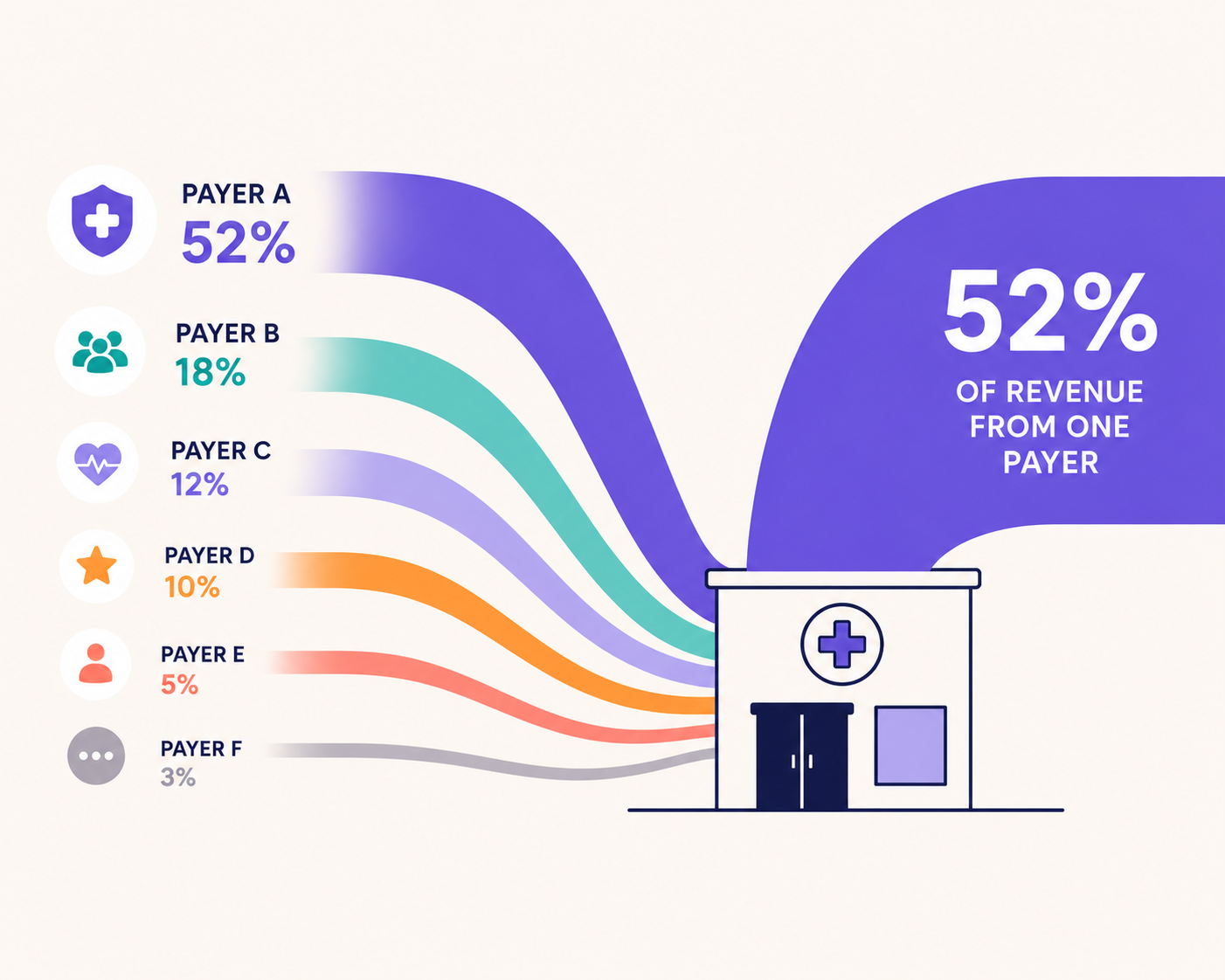
3. Don’t Rely Too Heavily on One Payer: Payer Mix Strategy Matters
If one payer makes up too much of your revenue, your business becomes vulnerable. If that payer changes rates, slows payments, or undergoes a system migration (looking at you, TRICARE), your entire operation can take a hit.
Ask yourself:
- Does any one payer account for 40–50% or more of your total revenue?
- Are you actively tracking which payers are paying the fastest - or the slowest?
A good payer mix spreads your risk. If one source slows down or changes rates, you’ve got others to keep things moving.
Flychain helps practices go one step further with our contracted rate analysis offering. You can compare your contracted rates against the market, arming you with the data needed to negotiate better rates with payers. It’s one of the fastest ways to improve margins without seeing more patients or cutting costs.
4. Pulling It All Together: Flychain Helps You Stay One Step Ahead
Financial resilience isn’t just about reacting when things go wrong - it’s about putting the right systems in place before trouble hits.
At Flychain, we provide:
- Full-service accounting and bookkeeping tailored to healthcare
- Revenue tracking by payer, with monthly trend charts for each payer
- Smart expense monitoring to flag overspending and uncover savings
- Access to fairly priced working capital when you need it
- Payer contracted rate analysis to identify opportunities for rate renegotiations
- Ongoing support from our team of healthcare financial experts - so you’re always prepared
In a world of shifting policies (e.g., proposed Medicaid cuts) and unpredictable disruptions, we help you stay financially grounded. We reduce the financial management burden so you can focus on what matters most: caring for your patients.
👉 Ready to stay ahead of the curve? Let Flychain help you build a stronger financial foundation - before the next policy shift or payer delay. Book a demo today!
Practice Financial Warning Signs: Frequent Questions
What are the early financial warning signs that a healthcare practice should watch for?
Early warning signs include a cash position that's tightening month over month despite steady revenue, accounts receivable aging reports showing a growing proportion of claims past 90 days, payroll costs creeping above 60 to 65 percent of operating revenue, net profit margin declining over successive quarters, and revenue that is growing but cash is not following.
Any of these trends, caught early with current monthly financials, can be addressed through targeted action; the same trends caught late become crises.
How can healthcare practices prepare financially for policy changes like Medicaid cuts or reimbursement updates?
Financial preparation starts with understanding your current exposure: what percentage of your revenue comes from Medicaid, Medicare, and each commercial payer, and how a rate reduction in any of those would affect your overall financial picture.
Practices with current, payer-level financial reporting can model the impact of policy changes before they happen. Diversifying payer mix, maintaining a capital buffer or line of credit, and having clean books that qualify for financing are the three most practical safeguards against policy disruptions.
What tools help healthcare practices monitor revenue KPIs to catch financial problems early?
The most effective monitoring tools provide real-time or monthly views of key financial metrics: including payer-level revenue trends, gross profit margin, payroll as a percentage of revenue, and cash flow dashboards.
Flychain's CFO Hub is specifically designed to surface these metrics for independent healthcare practices, with benchmarks that put your numbers in context relative to peers in your specialty. This early-warning visibility is the primary difference between reacting to financial problems and preventing them.
How should a healthcare practice restructure its finances after a difficult year or unexpected shock?
Recovery from a difficult financial year starts with an honest, data-driven assessment of where money was lost - whether through reduced reimbursements, increased costs, billing inefficiencies, or poor payer mix.
Once the sources of loss are identified, the practice can prioritize targeted interventions: renegotiating underperforming payer contracts, right-sizing clinical staffing to match current demand, accessing working capital to rebuild cash reserves, and improving bookkeeping accuracy to ensure future problems are spotted earlier.
Why is financial visibility key for independent healthcare providers dealing with policy uncertainty?
Policy changes - whether Medicaid rate adjustments, prior authorization rule changes, or regulatory shifts - affect practices differently depending on their payer mix and financial structure. Practices with real-time visibility into payer-level revenue, current cash flow projections, and up-to-date benchmarks can quickly model how a specific policy change would affect their bottom line and take action before the change goes into effect. Practices relying on quarterly or annual financial reviews lack the lead time to respond effectively.
What should a healthcare practice do if revenue is declining due to payer rate changes?
The first step is to quantify the exact impact: which payers, which CPT codes, and at what rate level are driving the decline. From there, options include requesting a renegotiation meeting with the affected payer supported by market benchmark data, shifting scheduling and marketing efforts toward higher-margin services or payers, reducing controllable costs to protect margins, and using working capital financing to bridge the gap while adjustments take effect.
None of these responses are possible without current, payer-level financial data.
How can finance tools reduce burnout for practice owners overwhelmed by admin and financial stress?
Financial stress is a significant and under-discussed driver of practice owner burnout. The combination of not knowing your financial position, spending personal time on bookkeeping tasks, and making consequential decisions without clear data creates anxiety that compounds the already-demanding work of running a healthcare practice.
Platforms like Flychain address this directly by providing accurate monthly financials without requiring owner involvement in day-to-day bookkeeping, surfacing decisions-ready insights rather than raw data, and ensuring that financial questions have clear, current answers when they arise.