.avif)
Running an ABA clinic—especially one serving Medicaid populations—often feels like juggling compliance checks, high staff demand, tight margins, and nonstop documentation all at once.
And no matter how mission-driven your team is, even small workflow errors or scheduling gaps can quickly turn into denied claims, cashflow delays, or overwhelmed staff.
You’re not alone if that feels familiar. In fact, we’ve written about how the system is rigged against independent healthcare providers, and ABA organizations experience that reality more than most.
At Flychain and Office Puzzle, we’ve seen firsthand how much stability, confidence, and predictability a clinic gains the moment operations and finances finally work together instead of in silos.
That’s why our teams have partnered: to help ABA providers build efficiency upstream—where scheduling, intake, data collection, and billing accuracy matter most—and connect it to clear, reliable financial reporting downstream.
In this article, we’ll explore how efficient ABA staff scheduling, stronger intake workflows, and integrated ABA clinic efficiency tools create healthier margins, reduce preventable denials, and build long-term resilience.
We’ll also break down how Office Puzzle and Flychain complement each other, providing ABA organizations with the operational structure and financial clarity they’ve historically lacked.
Why Efficient ABA Staff Scheduling Matters More for Medicaid Providers
When operating under Medicaid, the fundamentals often make the difference between a successful claim and one that is denied: Was the right BCBA scheduled?
Was the authorization up to date? Did the timesheet align with the treatment plan?
This is where efficient ABA staff scheduling becomes a strategic advantage rather than just an administrative task.
From automatically applying authorization rules to built-in reminders, Office Puzzle’s ABA scheduling tools system helps teams ensure nothing slips through the cracks.
For Medicaid-heavy clinics, this matters enormously, because a simple mismatch between scheduled hours and approved hours can trigger rejections that drain valuable admin time and delay cash flow by weeks or months.
When these clean operational workflows pair with Flychain’s healthcare-specific financial insights, clinics get a full picture of how scheduling impacts margins, payroll, and long-term financial stability.

How ABA Intake Management Reduces Denials and Protects Margins
The intake process is one of the most overlooked drivers of financial performance. Missing credentialing steps, outdated documents, incomplete consents, or authorization gaps can all create downstream errors that surface months later as Medicaid denials.
Clean intake isn’t just about onboarding. It’s about setting up every operational workflow to run smoothly from day one.
Office Puzzle’s client management and operational workflows directly support stronger ABA intake management by centralizing everything.
Clinics can easily keep client records, authorizations, treatment plans, and service details in one place - searchable, up to date, and accessible to the care team.
Features like documentation management, e-signatures, and session sync ensure that intake information flows automatically into scheduling, data collection, and billing.
And with smarter scheduling rules that account for authorization limits and provider roles, clinics avoid the early bottlenecks that often lead to preventable delays or denials.
On the financial side, Flychain complements this operational accuracy by tracking the true cost of delivering services.
Together, the partnership gives practices both the ABA tools and the visibility needed to ensure every authorized service is billable, and actually paid.
Connecting Operational Accuracy to Financial Clarity
Operational mistakes aren’t just administrative headaches. They’re financial risks. When sessions get logged incorrectly or batch billing lacks supporting documentation, those issues eventually surface in the financials as unpaid revenue, tightening an already thin margin.
Flychain helps ABA owners see these patterns clearly. Through healthcare-specific bookkeeping, month-end financials, and CFO-level insights, clinics can view:
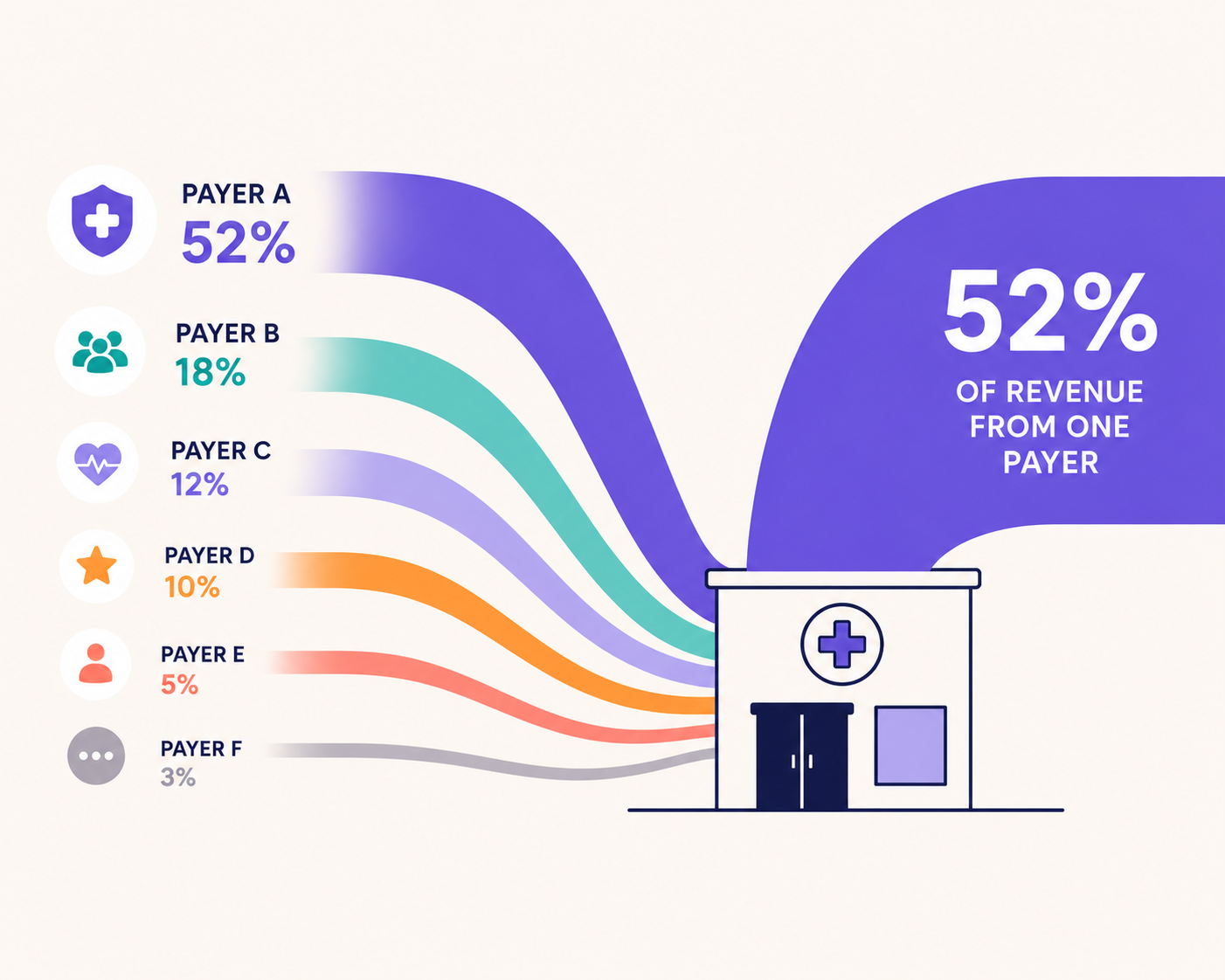
- How each payer contributes to monthly revenue, making it easier to spot delays or shifts in reimbursement.
- Cost per service line or location
- Payroll broken out by clinical vs. administrative teams, giving owners visibility into where staffing costs are concentrating and margin impact.
- Key financial KPIs to understand how daily operations impact long-term sustainability.
- Contracted rate comparisons, showing whether current reimbursement rates are competitive or undervalued.
- Working capital needs, with Advanced Payments on Claims providing stability when Medicaid payers delay.
When Flychain’s downstream clarity meets Office Puzzle’s upstream precision, ABA practices finally get the two things that matter most in a Medicaid landscape: transparency and control.
To dive deeper into what strong financial visibility should look like, you can read our full breakdown here. It covers what independent practices should expect from high-quality medical accounting software.

ABA Clinic Efficiency Tools That Strengthen Compliance and Reduce Burnout
Running a sustainable ABA practice isn’t just about billing correctly. It’s about reducing the daily friction that your providers, BCBAs, and admin teams face.
That’s where the right ABA clinic efficiency tools make all the difference.
Office Puzzle brings structure and automation to the operational backbone of a clinic, including:
- Centralized client management to keep records, authorizations, and service details organized from intake through discharge
- Smart, conflict-free scheduling that aligns sessions with provider roles and authorization rules
- Real-time data collection with smart autocomplete to streamline documentation and reduce errors
- Coordinated service plans and authorizations that sync directly into session notes and billing
- Integrated billing and claims workflows that reduce manual handoffs and speed up clean claim submission
- Reporting and analytics that help teams monitor operations and performance trends
- HIPAA-compliant documentation and e-signatures to keep clinics audit-ready
- Electronic Visit Verification (EVV) for home- and community-based services
These aren’t just conveniences, they create the foundation for systems that prevent staff burnout, reduce overtime, and increase predictability. And when paired with structured ABA intake management, clinics avoid the early administrative errors that often cascade into billing delays or compliance risks later on.
Paired with Flychain’s financial control tower, which includes healthcare accounting and bookkeeping, tax filing & strategy, working capital, and CFO intelligence, clinics gain the financial stability needed to support staff retention, reinvest in growth, and weather unpredictable reimbursement cycles. And for those looking to strengthen their tax strategy even further, we also shared a detailed guide on strategic tax planning for private medical practices.
Practical ABA Tools That Help Medicaid-Heavy Clinics Thrive
Supporting Medicaid caseloads often means juggling high authorization requirements, strict documentation rules, and long reimbursement timelines.
The right ABA clinic efficiency tools help lighten that load by streamlining workflows, reducing administrative strain, and making day-to-day operations more predictable for your team.
Across the partnership, practices gain access to:
Operational ABA Tools from Office Puzzle
Office Puzzle gives clinics the operational foundation they need to stay compliant and efficient, helping teams:
- Keep client records, authorizations, and service details organized
- Schedule staff accurately and avoid authorization or role-based conflicts
- Capture data in real time and ensure documentation matches treatment plans
- Streamline billing workflows so claims move cleanly from session to submission
- Maintain coordinated workflows that keep intake, scheduling, and documentation aligned
Financial ABA Tools from Flychain
Flychain builds on that operational accuracy by giving ABA owners the financial clarity to plan ahead and protect margins. Clinics gain:
- Accurate monthly bookkeeping tailored to healthcare
- Tax filing and proactive year-round planning
- Working capital through Advanced Payments on Claims to bridge Medicaid delays
- CFO-level visibility into payer revenue trends, margin benchmarks, payroll benchmarking, and key drivers impacting profitability.
- Contracted rate analysis to compare your reimbursement rates to market benchmarks and identify opportunities for payer renegotiation.
Together, these ABA tools give clinics what they’ve historically lacked: alignment between operations and financial health.

Why Flychain and Office Puzzle Joined Forces
ABA providers, especially those serving Medicaid families, deserve systems that reduce strain, not add to it.
After working with hundreds of healthcare providers, we’ve seen that operational accuracy without financial clarity creates blind spots, and financial reporting without operational precision creates leaks.
Our partnership aims to fix both sides of that equation.
Office Puzzle ensures operational workflows - from intake to scheduling to data collection to billing - stay accurate, compliant, and efficient.
Flychain turns those clean systems into transparent financials that help owners plan ahead, understand margins, and build resilience.
It’s a shared commitment to supporting mission-driven ABA organizations that serve some of the most vulnerable communities.
Together, these ABA clinic efficiency tools create the operational backbone that Medicaid-heavy providers need to stay compliant, reduce staff strain, and maintain predictable financial performance.
ABA Staff Scheduling: Frequently Asked Questions
How does ABA staff scheduling affect a clinic's financial performance?
Scheduling efficiency in ABA directly determines billable hour output, which is the primary driver of revenue. When sessions are cancelled without quick backfill, authorized hours go undelivered, representing revenue that was approved by the payer but never collected.
Poor scheduling also creates overtime liability and staff burnout, two of the leading drivers of turnover in ABA organizations. Clinics that align scheduling tightly with authorization limits, provider roles, and caseload capacity consistently achieve more predictable revenue and lower payroll-as-a-percentage-of-revenue ratios than those managing scheduling reactively.
What ABA practice management software features matter most for financial health?
The features that most directly impact financial health in ABA practice management software are authorization tracking that prevents sessions from being delivered outside approved limits, automated billing that reduces coding errors and claim denials, real-time scheduling that eliminates unplanned gaps in billable hours, and documentation workflows that ensure compliance before claims are ever submitted.
When these operational features are paired with a financial platform like Flychain that categorizes revenue by payer and tracks margins by CPT code, clinic owners gain a complete picture of how daily operational decisions translate into financial outcomes.
What are the biggest financial risks of poor ABA staff scheduling?
The biggest financial risks are claim denials from sessions delivered outside authorization limits, overtime costs from unplanned schedule gaps being filled by available staff regardless of role, and staff burnout leading to turnover, which in ABA can cost $10,000 to $30,000 per clinician to replace when recruiting, training, and productivity ramp-up time are factored in.
Medicaid-heavy clinics face additional risk because Medicaid has stricter documentation and authorization requirements than commercial payers, meaning scheduling errors are more likely to result in denied claims that are difficult or impossible to appeal after the fact.
How can ABA therapy staff retention be improved through better operational and financial systems?
Staff retention in ABA improves when clinicians feel operationally supported and financially stable. On the operational side, this means removing administrative friction; streamlining documentation, eliminating scheduling conflicts, and ensuring BCBAs aren't spending clinical time on paperwork.
On the financial side, it means the practice itself is stable enough to pay consistently, invest in training, and offer competitive compensation.
Practices that use Flychain's salary benchmarking can verify whether their BCBA and RBT compensation is aligned with market rates, preventing the quiet turnover that happens when staff discover they're underpaid relative to comparable clinics.
Which platforms help ABA clinics automate tracking of payables and receivables to avoid cash crunches?
ABA clinics that combine an operational platform managing scheduling and billing with a financial platform tracking receivables and expenses gain the most complete visibility.
On the financial side, Flychain tracks outstanding insurance claims by payer, reconciles deposits against expected reimbursements, and surfaces cash flow projections that give clinic owners advance warning of upcoming shortfalls.
Paired with Flychain's Advanced Payment on Insurance Claims, which advances funds on outstanding receivables within 48 hours with no personal guarantee - clinics have both the visibility and the tools to avoid last-minute cash crunches without resorting to high-cost emergency financing.
What are the signs that an ABA clinic's operations and finances are misaligned?
Common signs of misalignment include billing a full schedule but consistently running short on cash, claim denial rates above 5 percent, accounts receivable aging reports showing a growing balance of Medicaid claims past 90 days, and an inability to answer basic questions like revenue per BCBA or gross margin by payer.
These patterns typically indicate that operational errors; scheduling outside authorizations, incomplete documentation, or coding mistakes are creating financial losses that only become visible weeks or months later.
Connecting operational and financial data on a shared platform is the most direct way to close this gap.
What tools do successful ABA practices use for daily actionable financial metrics instead of quarterly reviews?
The most operationally effective ABA practices access financial metrics on a monthly basis at minimum, including gross profit margin, payroll as a percentage of operating revenue, payer-level revenue trends, and accounts receivable aging.
Flychain's CFO Hub is specifically designed to surface these metrics for ABA and behavioral health practices, with benchmarks that show how your KPIs compare to peer clinics in your specialty.
This shift from quarterly or annual financial reviews to monthly monitoring is one of the most consistent differences between ABA practices that grow sustainably and those that discover financial problems only after they've become difficult to reverse.
Conclusion: Build a More Sustainable ABA Practice With Confidence
Sustainable growth isn’t about working harder. It’s about giving your team the structure, clarity, and tools to work smarter.
Efficient ABA staff scheduling, Medicaid-aligned intake workflows, and streamlined operational systems all reduce the risk of denials and burnout. And when those operational improvements pair with Flychain’s accounting, bookkeeping, and financial intelligence, ABA practices finally gain the stability they need to grow with confidence.
If you’re looking to strengthen margins, support your team, and build a more resilient ABA clinic, now is the perfect time to explore how Flychain and Office Puzzle can support you.
🎧 For a deeper dive into how ABA providers can thrive on thin Medicaid margins, watch the episode on YouTube or listen on Spotify: “Thriving on Thin Margins: Building Sustainable ABA Practices on Medicaid.”
Ready to build a more stable, sustainable ABA practice? Reach out to us here.